
Italy's Parliament Approves Antisemitism Bill Adopting IHRA Definition
Italy has given final approval to legislation enshrining the IHRA definition of antisemitism, drawing praise from Israel and Jewish leaders and criticism from opponents who warn of a chilling effect on free expression.
By Julian Lee ·
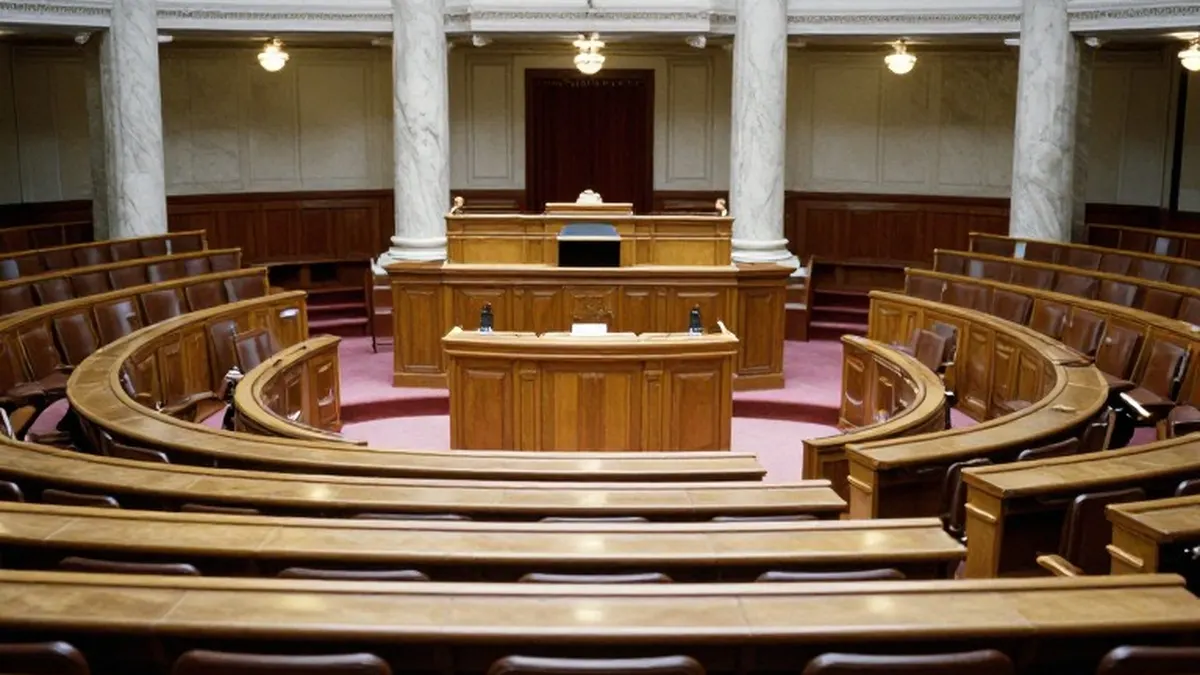
Italy's parliament has granted final approval to a bill aimed at combating antisemitism that enshrines the International Holocaust Remembrance Alliance definition of the phenomenon, a step opponents warn could curtail freedom of expression and advocacy for Palestinian rights.
The lower house adopted the legislation late on Tuesday by 147 votes to 93. The IHRA definition cited in the bill lists certain forms of criticism of Israel as examples of antisemitic conduct, a point that has drawn sustained objections from the left. The law carries no financial penalties or criminal sanctions. The center-right ruling bloc of Prime Minister Giorgia Meloni argues the measure is necessary to confront violence and discrimination.
Angelo Bonelli, co-leader of the Green-Left Alliance, known as AVS, was blunt in his rejection. "The right is exploiting the antisemitism bill to stifle criticism," he said.
Israeli Foreign Minister Gideon Sa'ar hailed the move, calling Italy an "example for other nations in the global fight against antisemitism." "At a time when antisemitism is surging worldwide, Italy is sending a clear message of zero tolerance for this unique form of hatred directed at the Jewish people," he said. He added that he particularly welcomed the law's reference to the IHRA working definition and the emphasis it places on education and on fighting antisemitism online.
Livia Ottolenghi, president of the Union of Italian Jewish Communities, also welcomed the bill's passage, saying it would strengthen the "democratic antibodies" of Italian civil society. "The fight against antisemitism is not a partisan battle, but a battle for society as a whole and cannot be subordinated to political alignments," she said in a statement.
Italy has experienced a surge in pro-Palestinian activism since the Gaza war began following the Hamas-led attacks on Israel on October 7, 2023. Left-wing parties have broadly backed those movements, while Meloni's government has accused some protesters of fomenting disorder.
Although the left largely voted against the bill, a small group of lawmakers from the main opposition Democratic Party abstained, defying their leadership's call to reject it and exposing internal divisions over the issue. The party has condemned violence in Gaza but has been less outspoken than its allies, the Five Star Movement and AVS, both of which have accused Israel of genocide, an allegation Israel rejects.
Opposition parties repeatedly pressed the government to amend the antisemitism definition, but their appeals went unheeded. The coalition dismissed accusations that the measure would restrict debate on Israel, insisting that political criticism would remain fully protected. "No one has ever sought to limit freedom of expression and criticism, which is a cornerstone of our democracy," said Paolo Emilio Russo of the co-ruling Forza Italia party.
Supporters of the bill said stronger safeguards were needed in light of a sharp rise in antisemitic incidents since the start of the Gaza war. Italy's Antisemitism Observatory, a research unit of Milan's Jewish Contemporary Documentation Center that monitors incidents nationwide, recorded 963 cases in 2025, almost four times the number reported in 2022.
"We have seen an increase in incidents involving people being shoved, spat at, or slapped. We recorded 18 cases in 2025 and 10 in the first six months of this year," the center's director, Gadi Luzzatto Voghera, told Reuters.