China pushes for open trade as global leaders meet in Shenzhen
Xi Jinping urges APEC members to prioritize free commerce while the US pursues protectionist policies and Russia seeks to weaken Western sanctions.
By Sofia Suzuki ·
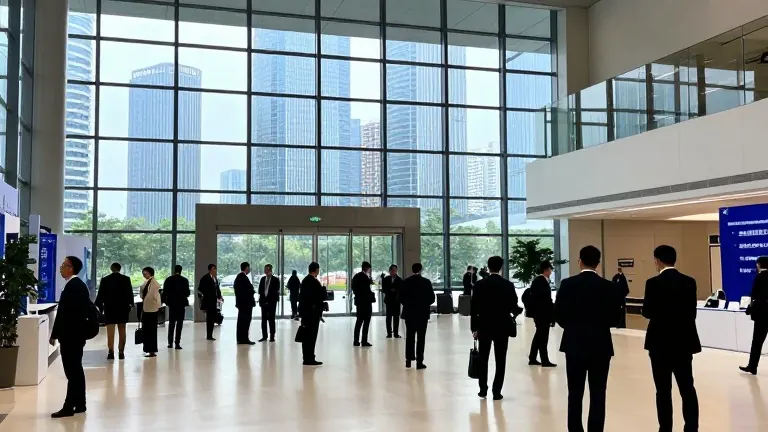
China is positioning itself as the primary engine for open trade in the Asia-Pacific region. President Xi Jinping made the case to business executives in Shenzhen on Wednesday. He spoke during a break in the annual Asia-Pacific Economic Cooperation summit.
The summit has highlighted Shenzhen's transformation over the last four decades. The city has evolved from a small fishing village into a major hub for technology and manufacturing. It is now filled with skyscrapers and serves as a key export center. China's rise to become the world's second-largest economy relied on global investment and access to international markets.
Xi told the group that the region needs open trade and fair growth to remain stable. He stated that China will reduce tariffs and broaden market access. He also promised reforms in complex areas such as rules, regulation, and standards. These moves aim to improve conditions for global investors.
Xi noted that China has shared development opportunities with other nations. He claimed that Beijing provides stability and predictability to global economic growth. George Chen, a partner at The Asia Group, said the speech signaled China's desire to lead global industrial transformation. Chen observed that Xi did not directly mention US export controls or Nvidia. He viewed the message as a contrast to Washington's more restrictive approach.
Xi faces domestic pressure from slowing growth. Retail spending and investment have weakened due to a long decline in the real estate market. The economy still grows at more than 4 percent per year. This growth is driven largely by a sharp increase in exports. That surge has caused friction with many trading partners. China's trade surplus is on track to exceed one trillion dollars for the second consecutive year.
Other world leaders have addressed the gathering. Canadian Prime Minister Mark Carney met with Xi on Tuesday. They agreed to lower tariffs on goods from their respective countries. Carney has worked to strengthen economic ties with China and the European Union in response to tensions with the United States. Malaysian Prime Minister Anwar Ibrahim told executives that large economies cannot impose their circumstances on smaller nations. He argued that fair growth benefits all parties.
Russian President Vladimir Putin attended the executive summit for the first time since 2017. He criticized sanctions and export restrictions as tools of economic domination. Putin said these measures have lost much of their intimidating effect. He noted that trade with the Asia-Pacific region accounts for more than half of Russia's total trade. Russia has submitted a bid to host the APEC summit in 2035.
Leaders are scheduled to meet behind closed doors on Thursday. They will also hold side meetings during the event. A new trilateral meeting between Donald Trump, Vladimir Putin, and Xi Jinping is planned. This will be the first summit of that type among the three global powers. The 21 APEC economies represent 60 percent of global economic activity. They account for half of world trade and 40 percent of the human population.