Rowan University researcher warns new South Jersey warehouses threaten local insect populations
Artificial lighting from expanding logistics hubs in Gloucester County is disrupting navigation, mating, and feeding habits for nocturnal species, according to new scientific findings.
By Julian Lee ·
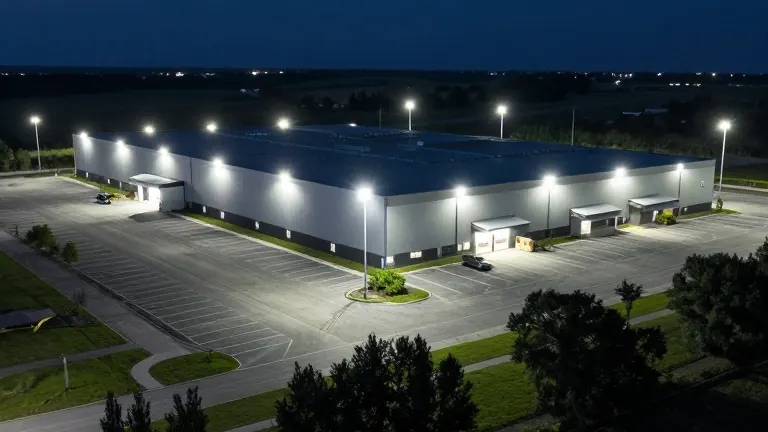
A 154-acre logistics development in Woolwich Township, New Jersey, plans to build three warehouses totaling nearly 1.2 million square feet. This project sits along Route 322, a corridor in Gloucester County that is seeing rapid commercial expansion. A separate proposal in Harrison Township includes ten warehouses on 385 acres. These buildings require extensive outdoor lighting that turns previously dark rural areas into brightly lit zones after sunset.
Daniel Duran, an assistant professor of environmental science at Rowan University, described this shift as part of a cumulative pressure on local ecosystems. He noted that pesticides and habitat loss already stress insect populations. Duran said artificial light acts as an additional factor, comparing the combined threats to a multi-punch combination that weakens biodiversity. Although he has observed declining insect numbers in New Jersey, he emphasized that these observations are anecdotal and that lighting is just one component of the problem.
Nocturnal insects rely on natural light sources like the moon and stars for navigation. Yahel Ben-Zvi, a postdoctoral researcher at Rutgers University, explained that artificial lights confuse these cues. Moths often fly toward porch and street lights because the sources disrupt their angle of travel. When insects circle these close-range lights, they can physically damage themselves or exhaust their energy reserves. This behavior makes them easier targets for predators such as toads, birds, and bats.
The disruption extends beyond simple predation. Research indicates that artificial light at night interferes with mating and feeding cycles. Moths exposed to artificial light spend less time feeding than those kept in darkness. Duran stated that disoriented insects struggle to find mates, which directly impacts their reproductive success. A 2017 study in Nature found that nocturnal plant visits dropped by 62% in illuminated areas in Switzerland. The same study reported a 13% reduction in fruit production for the focal plant, suggesting that lighting affects food chains beyond the insects themselves.
Fireflies face a specific challenge because they use bioluminescent flashes to communicate. At least 80% of firefly species in North America rely on these signals. Artificial light can drown out these flashes, making it harder for individuals to locate each other. A 2020 study cited habitat loss, artificial light, and pesticides as the primary threats to firefly populations. While precise population counts are difficult to obtain, experts note a general decline in both occurrence and abundance over recent decades.
New Jersey's State Planning Commission has addressed this issue in its Warehouse Siting Guidance. The document recommends reducing glare and light pollution to the maximum extent possible. It suggests using full cut-off shields and directing light toward the interior of sites rather than outward. The guidance also proposes installing motion sensors that dim exterior lights to between 25% and 50% output after 10 minutes of inactivity. These measures aim to minimize the disturbance caused by 24-hour commercial operations.
Duran emphasized that the color of the light matters for insect exposure. A 2022 review in the Annual Review of Environmental and Resources noted that many LEDs emit strongly at blue wavelengths, which are particularly sensitive to biological responses. He recommended switching to amber or yellow-toned bulbs that attract fewer insects. He described this change as a simple step communities can take to reduce harm. The Xerces Society for Invertebrate Conservation also encourages similar practices to protect firefly habitats.
Development along Route 322 and other parts of South Jersey will continue to alter the daytime view. The changing nighttime environment presents a distinct set of challenges for the region's ecology. Local planning documents now acknowledge the need for specific lighting standards to mitigate these effects. The goal is to balance commercial growth with the preservation of the dark conditions that nocturnal species require for survival.