Flights, banks and emails hit by wave of U.S. technology outages
A cluster of recent technical failures at the FAA, JPMorgan Chase, Microsoft, Apple and the NSA has unsettled Americans, though officials say none were caused by cyberattacks.
By Hannah Takahashi ·
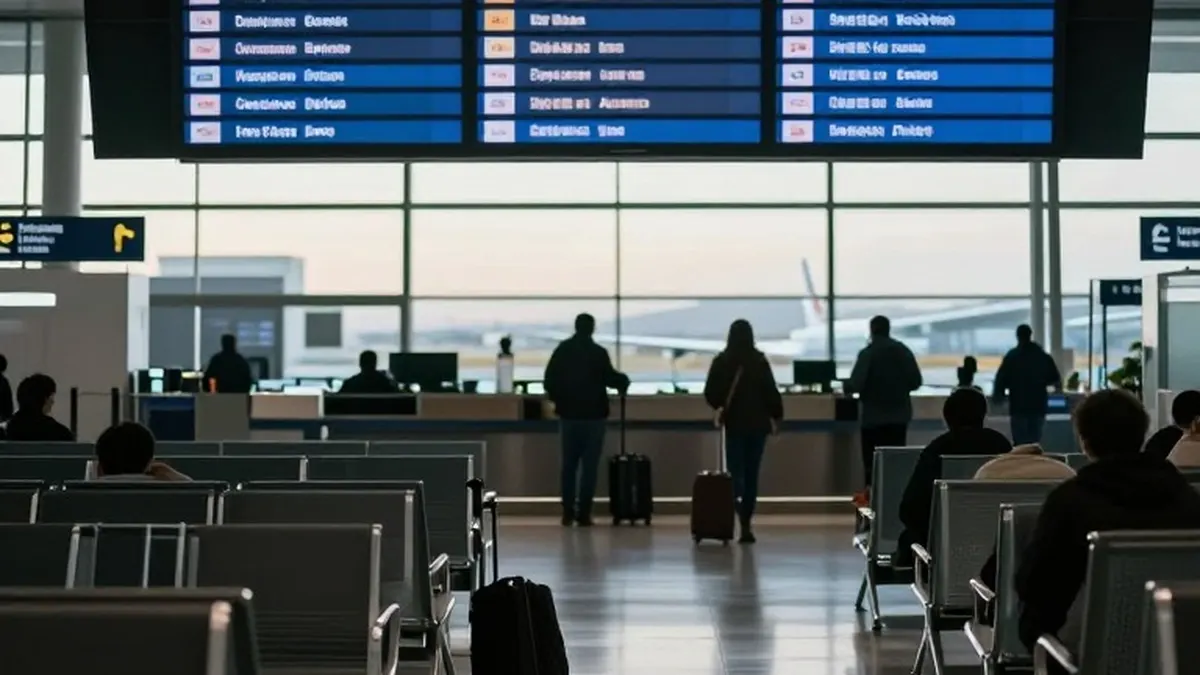
A series of technical outages across the United States in recent days has disrupted air travel, banking, email and even classified government communications, leaving officials working to reassure a public anxious about everything from boarding flights to accessing bank accounts. The organizations affected, including the Federal Aviation Administration, JPMorgan Chase, Microsoft, Apple and the National Security Agency, say the incidents were not the result of cyberattacks and were largely blamed on technical glitches.
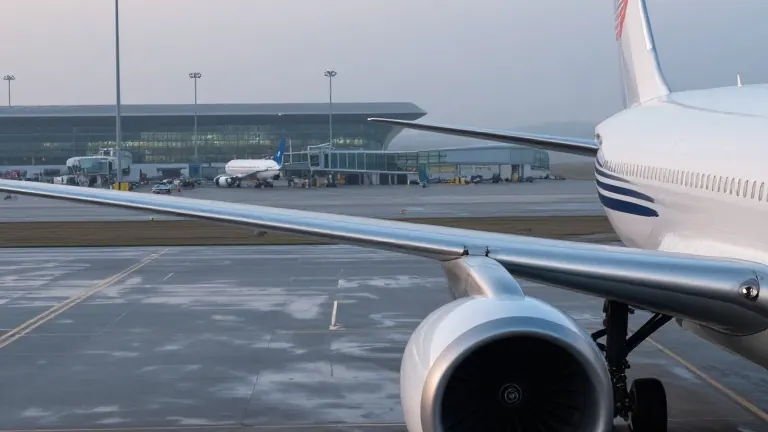
The most visible failure came Friday, when the FAA ordered a countrywide ground stop that halted thousands of flights for almost five hours because of an air traffic control communications outage. It was the longest nationwide halt to U.S. air travel since the Sept. 11, 2001, al-Qaeda attacks. Transportation Secretary Sean Duffy said there was no evidence of a cyberattack, explaining that a problem with a Juniper router installed by L3Harris Technologies at a remote Arkansas facility "was not identified quickly enough," and that lessons had been learned to prevent a repeat. Jay Clayton, the Trump administration's director of national intelligence, told a House committee hearing Wednesday there was "no indication of any external threat actors or state-sponsored actors."
Equity research and brokerage firm Bernstein estimated that the ground stop and the weekend recovery work cost the four largest U.S. airlines a combined $345 million US. Days later, United Airlines said an outage that delayed more than 100 departing flights on Monday involved a system used to determine a plane's final weight, and that there was no indication it was cybersecurity related.
Some experts warn that the pressure to patch software vulnerabilities exposed by artificial intelligence is itself creating risk. "We have systems like the FAA systems, which are known to be ancient and really need an upgrade," Anne Neuberger, a general partner at venture capital firm Andreessen Horowitz and a former White House deputy national security adviser, told the Wall Street Journal. "In addition to that, we have this whole set of AI attackers that are able to find vulnerabilities in code."
In banking, JPMorgan Chase, the largest U.S. bank, said a software bug affected its internal hardware systems and caused transaction delays beginning Monday. Some Chase customers received a message reading, "Some services aren't available. We're working on them. Please try back later." A spokesperson said the problem was resolved later Monday and that "transactions are processing normally," stressing it was an isolated bug and not a cyberattack. The bank said customers at Bank of America, Citigroup and other institutions transacting with Chase may have experienced slowdowns even though those banks had no issues of their own.
That ripple effect reflects how interconnected modern finance is. "Even when the cause is a technical failure rather than a cyberattack, an issue at one point in the system can disrupt transactions elsewhere," said Christina Powers, who specializes in cybersecurity and banking at West Monroe, a Chicago-based digital services firm. For worried customers, The Associated Press noted that money in accounts remains safe even when online banking is down, and that deposits are insured up to $250,000 US by the Federal Deposit Insurance Corporation.
Microsoft, meanwhile, said the outage that struck its email and video-conferencing services Thursday was caused by an unspecified problem with what it called a "network capacity upgrade," not a cyberattack or rogue AI agents. The disruption lasted more than 24 hours, severely affecting Outlook, Teams and the Copilot AI assistant, before the company said Saturday that services had fully recovered. The outage hit government agencies from Australia and Japan to the United States, delayed trading firms, prevented some companies from publishing earnings and led airlines to warn of communication lags, though organizations running Microsoft services on their own servers were somewhat spared. It ranks among the longest outages in Microsoft's history and its second service disruption this year.
On Tuesday, Apple said it was working to restore systems after an internal update knocked out customer services including iCloud and Apple Pay, adding that the issue was not caused by a cyberattack.
The same day, an internal National Security Agency network used to communicate classified information went offline following what the agency called "temporary degradation" during "routine maintenance." The problem disrupted NSANet, a classified network used by agency employees, according to a defence official who spoke to The Associated Press on condition of anonymity. "While some internal systems were affected, mission-critical capabilities remain fully operational and our ability to defend national security continues," the NSA said, adding that its infrastructure "is designed with multiple layers of redundancy to maintain operations during planned maintenance or unexpected events." The agency offered no further details on the cause or scope of the disruption.