Biden's final call with Netanyahu: warm words at odds with his memoir's harsh portrait
A transcript of Joe Biden's last phone call with Benjamin Netanyahu shows affectionate praise from the former US president, sharply contrasting with the critical account of the Israeli leader in Biden's new autobiography.
By Sofia Suzuki ·
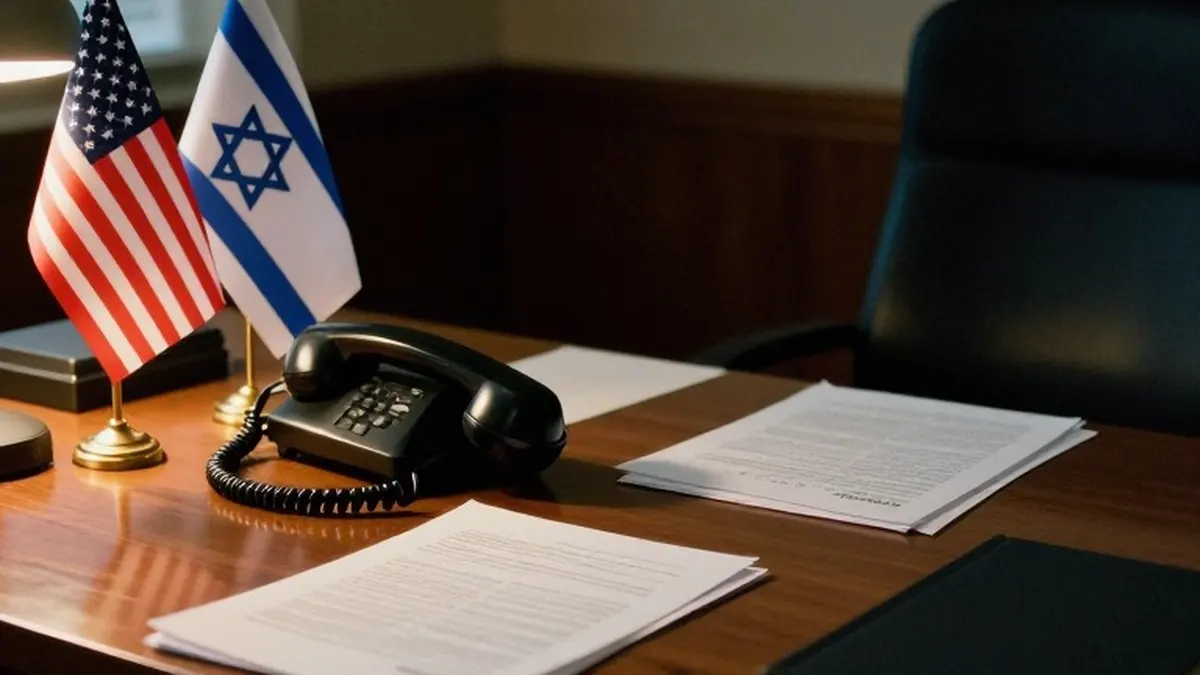
Former US President Joe Biden closed out his final phone call with Israeli Prime Minister Benjamin Netanyahu on a strikingly affectionate note, telling him, "I still love you, pal," according to a transcript of the conversation obtained by The Jerusalem Post. The warmth of that exchange sits uneasily beside the far harsher portrayal of the Israeli leader in Biden's new autobiography.
"You've been through hell. I can't tell you how much I appreciate you and what you've been through," Biden said in the call. "I know we've disagreed on occasion but, you know.. I still love you, pal." He went on: "I don't know how you've done it all.. Next time I think I have a tough job, I'll think of you.. you're a good man.. I admire you. It took a lot of courage to do what you did."
The two men's last public phone call took place on 15 January 2025, the day a ceasefire and hostage agreement was reached between Israel and Hamas, a deal negotiated with the assistance of the incoming Trump administration.
Biden's praise for Netanyahu, however, conflicts with the way he described their relationship in his memoir, Promise Me, America, according to Newsweek and other outlets that obtained excerpts of the book. In it, Biden accused Netanyahu of having "Trump-like tendencies" and said he was endangering democracy, Newsweek reported.
"He and I could be direct with each other, but there wasn't a ton of trust," Biden wrote in one excerpt reviewed by Newsweek. "I was also worried about Bibi's Trump-like tendencies. He could play fast and loose with the truth, and thought nothing of bending democratic institutions to serve his personal needs."
Biden also wrote that the Hamas-led 7 October 2023 attack on southern Israel, which killed around 1,200 people, reflected a "dereliction of duty" on Netanyahu's part. He accused the Israeli leader of making promises he had no power or intention to keep, adding: "While I understood that he was working under severe pressures, I was frustrated by his failure to think like a statesman and safeguard Israel's long-term interests, not just his own short-term political needs."
The memoir also recounts that, as vice president, Biden scolded Netanyahu over Israel's settlement expansion in the occupied West Bank, yelling, "Bibi, sit down," when Netanyahu called him to a window to view new settlements. Yet as president, Biden did nothing to stop the proliferation of settlements, which are illegal under international law. In 2024, his last year in office, Israel declared a record amount of the occupied West Bank as state-owned land, a move that allows for rapid settlement construction. United Nations secretary general Antonio Guterres said 2025, the first year of Trump's second term, saw the largest growth in settlement plans in the occupied Palestinian territory since the UN began monitoring.
The affectionate tone of the final call came as Netanyahu faced an International Criminal Court warrant for crimes against humanity over Israel's assault on Gaza. The overall toll of Palestinians killed since Israel launched its onslaught on the enclave in October 2023 stands at over 74,644, with another 175,978 wounded.
The ceasefire announced in January broke down by the spring of 2025, and Israel resumed attacking the enclave. The Trump administration announced a second ceasefire in October 2025, but Israel has violated that agreement, cementing its control over 60 percent of the enclave and continuing to restrict basic humanitarian aid to Palestinians. Israeli attacks have also continued, with at least 1,614 Palestinians killed since October last year and another 5,849 wounded.
The gap between the call and the memoir follows years of reporting on strained ties. A flurry of media reports, mainly by the US news site Axios during 2023 and 2024, suggested Biden was angry and frustrated with Netanyahu, and headlines throughout 2024 said the US president was "running out" of patience and had threatened to pull support from Israel over its actions in Gaza.