Israeli cyber executive warns US outages could mark new era of digital warfare
Check Point chief of staff Gil Messing says recent failures in American aviation, banking and tech services may have been deliberate cyberattacks, despite official denials.
By Sofia Suzuki ·
A wave of technology failures that disrupted aviation, communications and digital services across the United States in recent days may have been caused by deliberate cyberattacks rather than ordinary malfunctions, Gil Messing, chief of staff at Israeli cybersecurity company Check Point, said Tuesday in an interview with Anat Davidov on 103FM radio.
Messing openly questioned the official explanation that technical problems were behind the breakdowns, which have affected air traffic control, banking services and Microsoft platforms. "I believe that in the coming period, we will uncover evidence showing malicious intent behind some of these significant disruptions," he said.
He described the incidents as a possible glimpse of a new kind of conflict. "This is the warfare of the new generation. It allows enemies to fight one another through digital means while maintaining their distance, and still causing damage," he added.
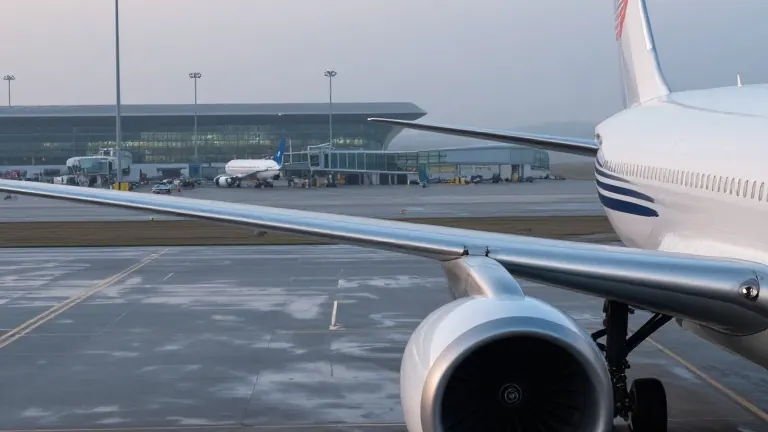
US officials have so far attributed the failures to aging infrastructure and technical faults. After a nationwide grounding of departing flights on Friday, Transportation Secretary Sean Duffy blamed outdated air traffic control equipment, while Homeland Security Secretary Markwayne Mullin said investigators had found no evidence of a cyberattack, though the investigation was continuing.
Messing countered that identifying a malfunction should be treated as the start of an inquiry, not its conclusion. "You can say it's a technical failure, but that is not a sufficient explanation, and it's not just in the United States," he said. "First, you identify a technical failure, and then the question becomes what caused that failure: Was it external interference, as happens in a cyberattack, or not?"
He argued that the scale and frequency of the disruptions match scenarios long feared by security experts. "When people talk about a digital doomsday scenario, this is the kind of thing they mean," he said, adding that "there has never been a sequence of technical failures in history that caused such extensive damage."
Messing also pointed to what he described as the Trump administration's careful wording on the disruptions, suggesting officials were avoiding ruling out a cyberattack because confirming one would imply an attacker and could amount to "almost a declaration of war that caused very significant damage."
Asked who might be responsible if the incidents prove to be attacks, he said operations of this magnitude usually have a state behind them. "The immediate suspects are the enemies of the United States: Russia, North Korea, Iran and perhaps China," he said. He noted that governments can use intermediaries to hide their role, explaining that "a state-backed force operates under the guise of another actor and tries to place the blame on that actor."
His assessment remains speculative. No evidence presented in the interview established that Russia, Iran, North Korea or China was responsible for the recent disruptions, and cybersecurity specialists caution that deliberate attacks and technical failures can produce similar consequences, potentially disrupting essential services on a national scale without a hostile state being involved. Messing has previously warned that artificial intelligence is expanding the capabilities available to malicious actors targeting essential systems.
Nevertheless, he warned that the incidents could be an early indication of how future conflicts will unfold, with digital attacks allowing countries to inflict widespread damage without engaging in conventional military confrontation.