Palestinian detainee 'slapped and stripped of hijab' by Israeli prison director, monitors say
Rights monitors say female detainees at Damon Prison were beaten for refusing to remove their hijabs for photographs, with one woman assaulted by the prison director after solitary confinement.
By Hannah Takahashi ·
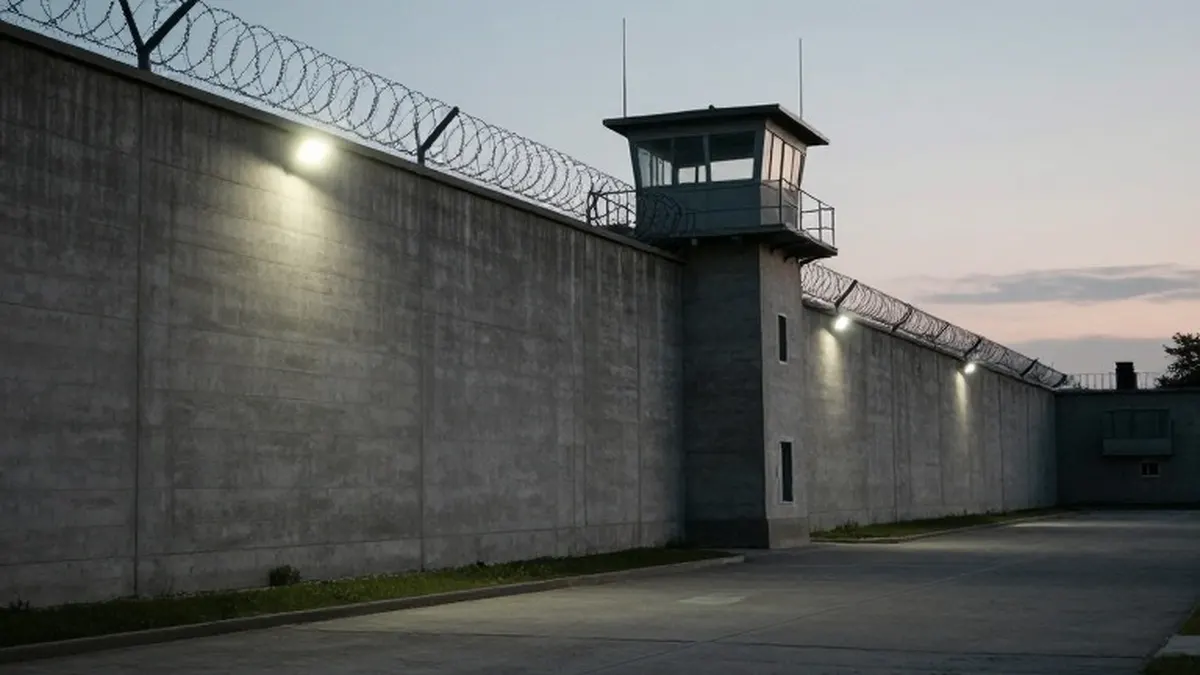
An Israeli prison director slapped a Palestinian woman detainee and forcibly removed her hijab during an assault at Damon Prison, Palestinian prisoners' rights monitors have reported.
The Prisoners' Media Office said on Tuesday that the prison administration had ordered female detainees to take off their hijabs before being photographed, claiming the procedure was necessary to update their personal records. Women who refused were physically assaulted.
According to the office, prison staff removed detainees from their cells one by one and took them to a photography room, where those who declined to uncover were beaten in an attempt to force them to comply. In one incident, the prison director tore off a detainee's hijab, slapped her and pushed her into the photography room.
The assault reportedly took place shortly after the woman had completed eight days in solitary confinement.
Amani Sarahneh, a spokesperson for the Palestinian Prisoners' Club, said lawyers who visited detainees at Damon Prison confirmed that women had been coerced into removing their hijabs during the photography procedures. She added that this was not the first time female detainees had faced such practices, and said targeting the hijab violated the women's privacy and dignity, reflecting the prison administration's use of various methods to mistreat and humiliate them.
"Violations are no longer limited to the hijab; they encompass all aspects of life inside the prison, in the absence of the 'red lines' that once constrained the conduct of the prison administration," she told Middle East Eye.
Sarahneh said the incident was particularly serious because the abuse extended beyond forcing detainees to remove their hijabs to filming the coercive measures. Raids and acts of repression are now routinely recorded, including instances in which detainees are taken into the prison yard and filmed, and she argued that such filming had become an integral part of the abuse rather than merely an administrative procedure.
A former Palestinian female detainee, who requested anonymity, told MEE that violations of women's right to wear the hijab occur daily inside Israeli prisons. She said one of the first procedures detainees face after arrest is being forced to remove all their clothing, including their hijabs, before being issued the brown prison uniform, leaving them to use pieces of their uniforms as head coverings. "The prison administration also denies female detainees access to prayer clothes, forcing them to use whatever fabric is available, even an old, torn bedsheet found in their cell, to cover their bodies during prayer," she said, adding that surveillance cameras installed throughout the prison further compound the violations of privacy. "These measures, taken together, deprive them of their most fundamental religious rights, leaving them no opportunity to practise their faith freely or in privacy."
The former detainee said physical assaults had become a daily occurrence, often carried out under various pretexts and for the most trivial reasons, with women frequently dragged, having their hair pulled and enduring repeated physical abuse. She described the food as extremely poor, with meals often undercooked, served without salt or seasoning and consisting mostly of lentils. She added that sick detainees who urgently need medical treatment and care receive no adequate medical follow-up, leaving them to endure illness and pain without proper intervention.
At least 90 Palestinian women, including three minors, are currently held in Israeli prisons, according to the Commission of Detainees and Ex-Detainees Affairs. Earlier this month, the commission reported that 24 per cent of female detainees were held under administrative detention, which allows Israel to detain Palestinians without charge or trial for indefinite periods.