Iranian spying convictions in Britain sharpen European security concerns before Trump, Xi and Putin meet
A London court's guilty verdicts against two men who surveilled journalists and a lawyer for Iranian intelligence have revived questions about Europe's readiness for hostile state operations.
By Sofia Suzuki ·
The conviction of two Iranian men for spying on journalists and a lawyer in Britain has renewed concerns over Tehran's intelligence operations abroad, exposing a wider security challenge for European governments at a sensitive moment in international relations.
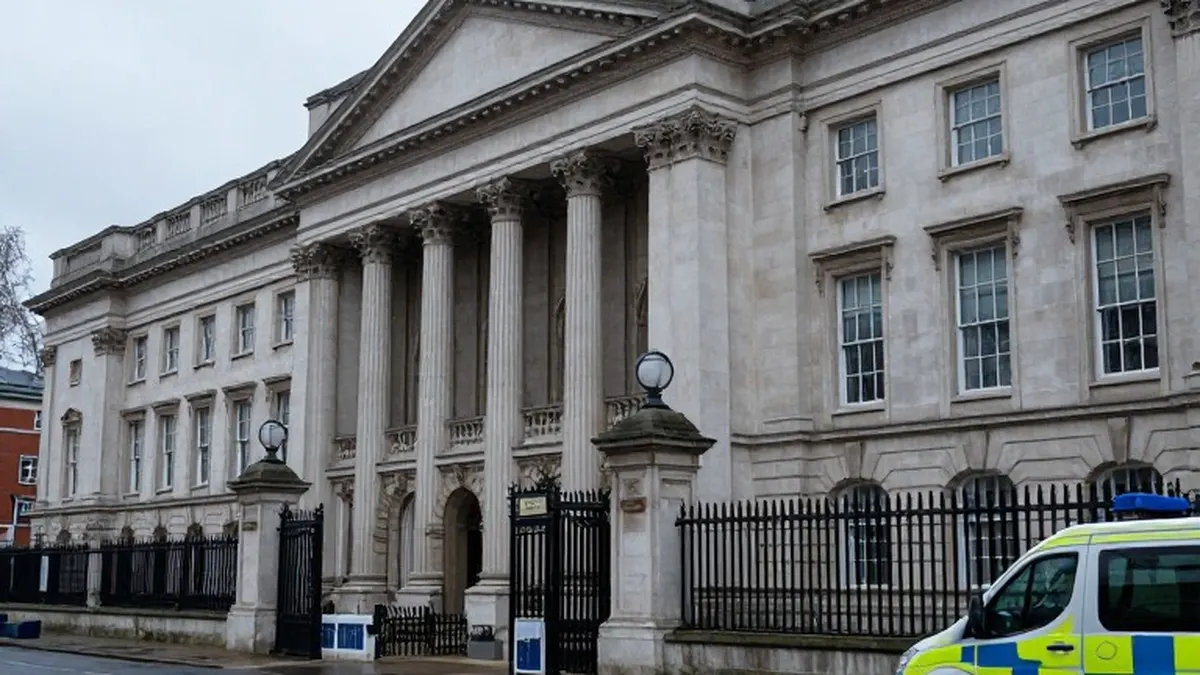
On November 12, Woolwich Crown Court found Mostafa Sepahvand, 41, and Farhad Javadi Manesh, 46, guilty of assisting a foreign intelligence service under Britain's National Security Act 2023. The pair conducted surveillance on behalf of Iranian intelligence against individuals considered hostile to Tehran. Sepahvand was additionally convicted of preparatory conduct intended to facilitate serious violence, and messages recovered by police showed he had discussed receiving 150,000 pounds ($198,000) in connection with a planned violent attack.
Among the targets were Mojtaba Pourmohsen and Kambiz Hosseini, journalists associated with the London-based Persian-language broadcaster Iran International, and Jonathan Turner, a founding member of UK Lawyers for Israel. Investigators established that the men monitored residential and professional addresses, collected photographs and videos, and researched their targets online. Sentencing is scheduled for December 17. A third defendant, Shapoor Qalehali Khani Noori, was acquitted of all charges, while Manesh was cleared of a separate preparatory conduct charge.
The verdicts follow earlier investigations into threats against Iranian opposition figures in Britain, including the March 2024 stabbing of Iran International presenter Pouria Zeraati in London. Two Romanian nationals were sentenced in July 2026 for their role in that attack, which a British judge concluded had been carried out on behalf of the Iranian state. The Iranian Embassy has denied involvement in violent operations in Britain.
"For Tehran, Iran International is not a foreign channel. It's a part of the domestic battlefield," Dr. Ebrahim Roshandel, a counterterrorism analyst and former Iranian diplomat, told The Media Line. "These networks are built in peacetime and activated in crisis. In fact, Europe has become the regime's laboratory for pressuring the West." He said the intelligence infrastructure behind such operations was developed over years through diplomatic cover and local intermediaries, allegations The Media Line noted it could not independently verify.
Eric Schouten, founder and CEO of Dutch security intelligence company Dyami and a former liaison officer with the Netherlands' General Intelligence and Security Service, said Iran's presence in Europe is longstanding and often operates through criminal proxies, complicating attribution. He added that European agencies frequently monitor suspected networks for extended periods before intervening, so a rise in arrests does not mean the activity is new.
The case unfolds amid a broader wave of unsettling incidents. On November 11, thousands of schools in Italy received hoax bomb threats, and schools in Scotland, Northern Ireland and the Republic of Ireland received similar messages, with no foreign government conclusively identified as responsible. On November 13, a technical failure in the US Federal Aviation Administration's communications network forced a temporary halt to departures, which authorities attributed to aging telecommunications equipment rather than any cyberattack.
The same day, US personnel responded to suspected unauthorized drone activity at RAF Lakenheath, while aircraft had previously been redistributed from RAF Mildenhall amid heightened precautions. The origin of the drone activity remains unknown, and no publicly established evidence ties it to Iran. Roshandel nonetheless said Britain holds a particularly sensitive position because of its military cooperation with Washington: "In Europe, Iran prioritizes its targets by focusing on American military bases. And among all these countries, Britain is the first."
The security concerns coincide with preparations for the November 19 trilateral meeting in Shenzhen between US President Donald Trump, Chinese President Xi Jinping and Russian President Vladimir Putin, held on the sidelines of the Asia-Pacific Economic Cooperation summit. The talks are expected to address strategic stability and nuclear arms control, while Washington also intends to raise Iran. The United States has separately reinforced its Middle East presence with the deployment of the USS Theodore Roosevelt carrier strike group, though such deployments preserve response options without establishing that an offensive has been authorized.
Officials stress there is no publicly established evidence that the British espionage case, the European cyber incidents and the activity near American bases form a single coordinated operation. Schouten's wider warning, however, is about European preparedness. "We are in the middle of it," he said. "Europe will be the next battlefield when it comes to both sides."