
Byron Bay doula left newborn to inflate jumping castle, coroner hears
A NSW coroner's inquest revealed conflicting accounts of a home birth where a doula departed to set up a jumping castle while the baby showed signs of distress.
By Hannah Takahashi ·
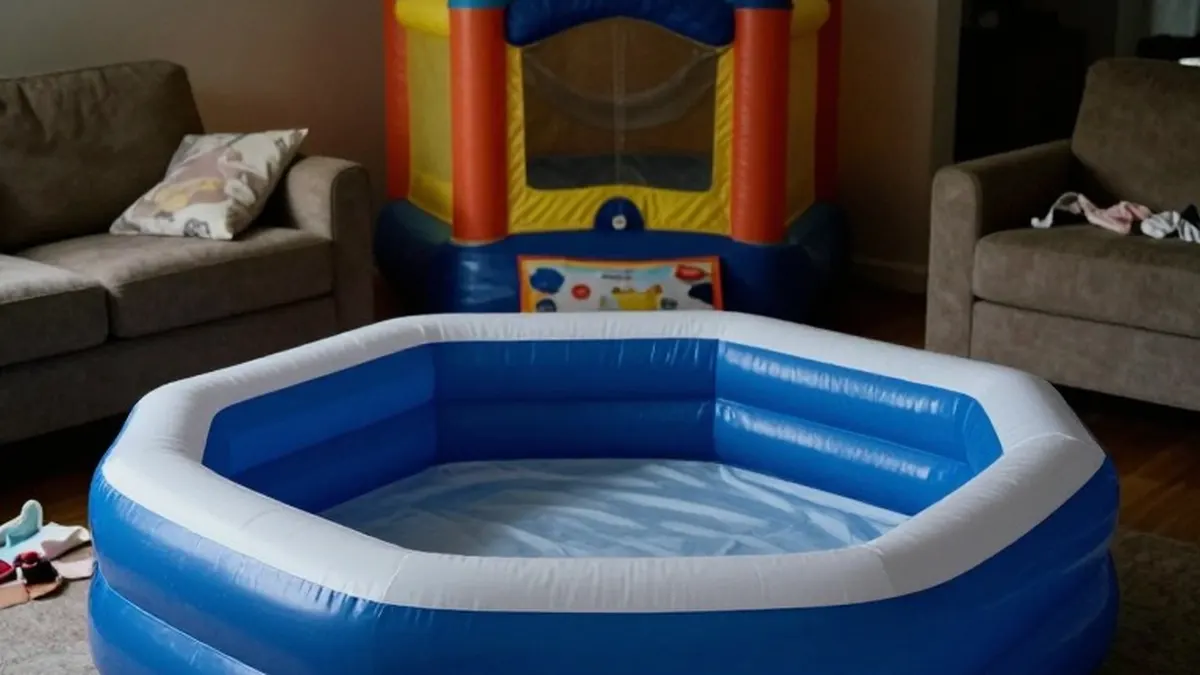
The New South Wales coroner's court heard detailed testimony on Wednesday regarding the death of a newborn in the Byron Bay area. The inquest, which is investigating the deaths of four babies born in free or home births between 2022 and 2024, focused on the case of Baby DH. The infant was born in an inflatable pool inside a candle-lit room at the parents' home, with no medically trained professional present. Baby DH lived for just over eight hours before being declared dead at the hospital.
Two competing narratives emerged during the proceedings. The parents claimed that the doula, Amy Lou Smith, reassured them the baby was fine before leaving to inflate a jumping castle. During her absence, the newborn turned purple, became floppy, and struggled to breathe. Smith, however, stated that everything appeared normal and that she had suggested seeking additional help if the couple desired it.
The father described the baby's condition immediately after birth, noting that his whole body was purple with darker hands and feet. Smith told the court she did not notice the purple coloration on the body, only acknowledging that some purple in the hands and feet was normal. When the parents reported that the baby's color was not improving, Smith reportedly said that as long as his abdomen was not purple, it was acceptable. The mother expressed shock, as the baby's entire body had been purple. The infant's temperature was also low at 34.5C, and Smith suggested trying to raise it to 37C.
The court heard that Smith described the baby's labored breathing as cute little noises, though she later told the court she did not use that specific phrase. She also mentioned that the baby had strange lumps on his body and was not feeding well. While suggesting they check the lumps, she warned that babies sometimes take time to latch onto the breast. The parents raised their concerns with Smith repeatedly, but each time they were reassured that the situation was under control.
Smith left the home to set up a jumping castle for her son's birthday. She sent the couple a picture of the inflated castle later, while they were attempting to contact a doctor. Smith told the court the castle was already set up and that the couple was happy for her to leave, adding that everything felt like it was OK. She also stated she believed the parents would have called an ambulance if they had real concerns, rather than texting a non-medically trained doula.
Eventually, the parents spoke to their general practitioner, who advised them to call triple zero. They performed CPR until paramedics arrived, but Baby DH did not survive. After the father made the emergency call, Smith also instructed them to call an ambulance and sent instructions on infant CPR. Throughout the hearing, Smith denied that her comments constituted clinical advice.
Neonatologist Dr Paul Evans testified that Baby DH had a complex heart defect that would have been visible on an X-ray. He found that the child's death was not inevitable and that a birth plan with proximity to a major hospital and specialist cardiac care could have allowed for treatment. The mother had initially approached a self-described birth keeper named Sita Tara Kali, but Kali did not feel she could help, leading the couple to engage Smith.
The couple paid for an online sovereign birth course for Smith and were reassured of her experience. Smith, who became a birth doula in 2020, holds a degree in fine art and has worked as a social worker and youth worker. She told the court she is not medically trained but completed a full-spectrum doula course. She learned CPR but was not familiar with applying it to newborns. She had been present at 15 births over four years, nine of which were alongside a midwife, and conceded she did not know what a low-risk birth would look like. Smith agreed that she now believes the best model for homebirth care involves a clinically trained midwife working alongside a doula.
The inquest into the deaths of the four babies in NSW's northern rivers region continues.