Iraqi government sets deadline for Kataib Hezbollah to vacate Jurf al-Sakhar amid escalating tensions
Prime Minister Ali al-Zaidi has ordered military forces to prepare for an operation in Jurf al-Sakhar, a strategic area controlled by armed factions for over a decade, following allegations of widespread oil smuggling.
By Julian Lee ·
Tensions in Iraq have intensified as the government moves to reassert control over Jurf al-Sakhar, a district north of Babil Governorate. The area has been under the security administration of armed factions, primarily Kataib Hezbollah, for approximately 12 years since its liberation from the Islamic State in 2014. Prime Minister Ali al-Zaidi has issued directives for Iraqi armed forces to enter the district, officially known as Jurf al-Nasr, and has established a strict deadline for the militia to evacuate by Friday evening, November 20.
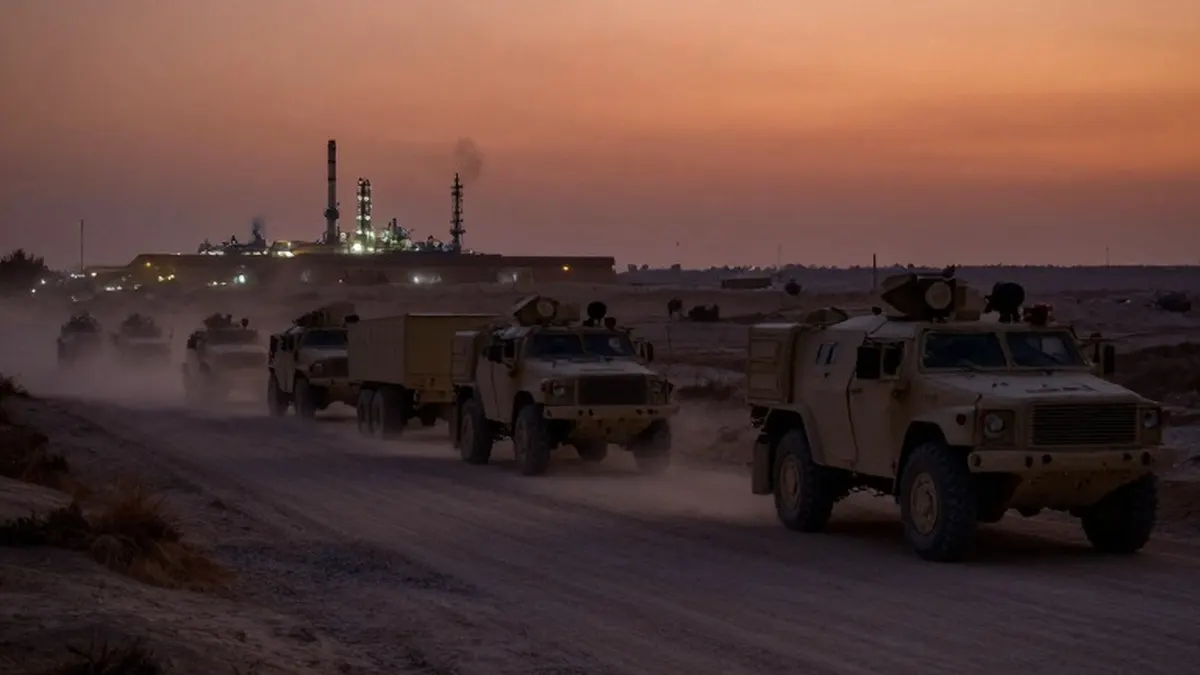
Military preparations are underway on the outskirts of the district, with the Iraqi army, National Guard, and Federal Police amassing in anticipation of a security operation. The escalation reached a critical point on Monday evening when a meeting between al-Zaidi and leaders of the Ruling Coordination Framework, a group of Iran-loyal parties, ended without consensus. Disagreements centered on the military option and the imposed deadline, with al-Zaidi reportedly insisting on regaining full control without concessions.
The dispute was triggered by leaked images and videos revealing large-scale oil smuggling operations within the area. An official investigative committee, ordered by the Prime Minister last week, confirmed the existence of illegal smuggling. The committee reported that dozens of tankers entered and left the district daily and that a pipeline and refinery were operating under militia control. Al-Zaidi stated that the state would enlist the Iraqi people to retake the area if security forces could not confront those involved in stealing and selling oil.
Jurf al-Sakhar is a strategically significant agricultural zone of approximately 650 square kilometers, located on the route between Baghdad and Karbala. Before 2014, it was home to over 80,000 members of the Janabi tribe. Following the displacement of residents, the Popular Mobilization Forces and the Iranian Revolutionary Guard took control. The area has since been reported to house prisons, weapons factories, and drug cultivation sites, serving as a major arms depot for the Revolutionary Guard.
A security source accompanying the government committee noted that the investigation faced restrictions, with militias dictating the route and limiting movement. Clashes occurred when the committee discovered crude oil and a refinery, contradicting militia claims that the fuel was gasoline. In response to the findings, al-Zaidi dismissed nine officials from security, intelligence, and oil ministries and referred those accused of smuggling to the judiciary.
Kataib Hezbollah has denied the smuggling accusations, arguing that the Prime Minister is using the case to pressure them in a broader dispute over arms. Despite this, eyewitnesses from the bordering city of Musayib report unprecedented military buildups on both sides. Residents stated that militia fighters have been summoned from Musayib to the district, while government forces continue to deploy around the perimeter.
Political analysts suggest the confrontation could mark a turning point in the relationship between the state and armed factions. Ali al-Ali, an Iraqi political analyst, noted that the area is the largest stockpile of weapons for several militias and is strategically located in the center of Iraq. He indicated that al-Zaidi may have received support from regional and global powers to resolve the issue, which could eliminate more than a third of the Shiite militias' strength if successful.
Hamid al-Sayed, an Iraqi politician, described the situation as a critical test of al-Zaidi's commitment to eliminating weapons outside state control. He noted that successful resolution could earn the Prime Minister significant support from Arab, American, and European countries. However, media figures close to the militias suggest that surrender is not currently in their vocabulary, with one operative stating that while mediation is possible, the group is ready for an open confrontation if war becomes necessary.