Ukraine can realistically join the EU by 2030 if reforms accelerate now, outgoing EU ambassador says
Katarina Mathernová says Kyiv must meet its interim benchmarks by next summer to stay in the same enlargement game as frontrunners such as Moldova.
By Julian Lee ·
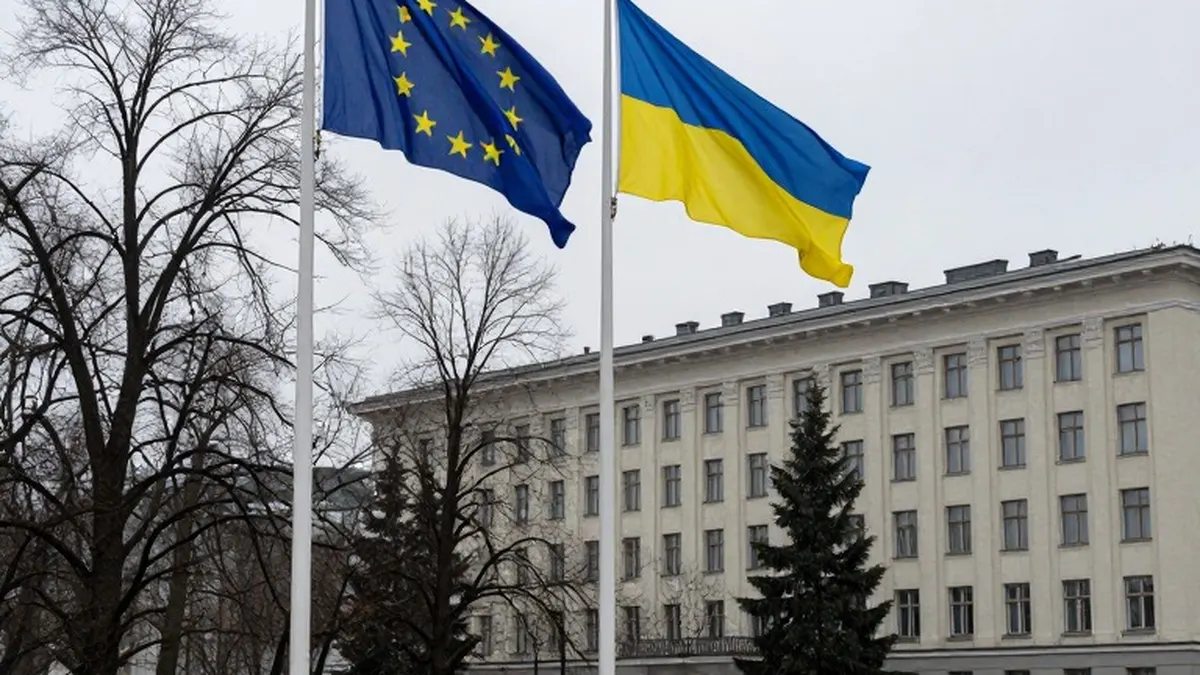
Ukraine's accession to the European Union by the end of the decade remains realistic, but only if Kyiv speeds up the pace of reforms immediately, EU Ambassador to Ukraine Katarina Mathernová has said in an interview with European Pravda.
Mathernová, who has served as ambassador since 2023 and worked on Ukraine's EU integration for more than 10 years, confirmed she will step down next year and leave EU institutions altogether. That makes this year's Enlargement Report, published last week, her last. She described it as the strongest and most encouraging assessment yet, saying it finally gives Ukraine credit for cumulative reforms, recognising progress in 14 areas, including virtually all of the Fundamentals chapters.
Despite the positive verdict, she warned that the tempo of change has been insufficient. "Ukraine needs to accelerate, and the time to accelerate is now!" she said, pointing to the Verkhovna Rada's recent sessions, in which several important reform bills passed first or second reading, as evidence of renewed momentum after a slowdown late last year and in the first half of this one.
Laying out a possible timeline, Mathernová said accession by 2030 would require sustained reform momentum even in wartime, with all technical work finalised by the end of 2028. The next decisive step is meeting the interim benchmarks, known as IBAR, which allow negotiation chapters to be closed. The European Commission's target, based on Ukrainian planning, is the first half of next year. She called next summer realistic, though she cautioned that a very difficult winter could interfere, while noting the prime minister's team hopes to move even earlier.
Addressing frustration that Moldova has moved ahead by receiving its benchmarks sooner, she said the comparison overlooks Ukraine's circumstances: daily bombardment, laws drafted in shelters, a parliament in its eighth year without elections, and a constitutional threshold of 226 votes that effectively requires a 60 percent majority for every law. "Fulfil the interim benchmarks by next summer, and I think then we are in the same game," she said.
On financing, Mathernová said Ukraine's funding gap for next year is estimated at around 70 billion euros, split between 30 billion on the civilian side and 40 billion on the military side. The EU aims to cover roughly two thirds and expects other partners to provide the rest. She highlighted two instruments already in place: the 50 billion euro facility in operation since 2024 and the 90 billion euro Ukraine Support Loan adopted this year. Despite occasional delays in the Rada, she stressed that "not a single euro was lost," as delayed reforms were eventually completed.
Among the outstanding tasks for parliament, she named a prosecution reform bill awaiting its second reading, a more transparent and merit-based selection of the prosecutor general, reform of the State Bureau of Investigation, and measures on the selection of judges to the Constitutional Court, the Supreme Court and high judicial bodies.
To speed up delivery, a Task Force was established in October following an agreement between Presidents von der Leyen and Zelenskyy. It is politically led by Prime Minister Serhii Koretsky and Commissioner Marta Kos, with Deputy Prime Minister Vsevolod Chentsov and Justice Minister Denys Maslov involved at working level, and meets twice a week. Relevant MPs, including Anastasiia Radina and Serhii Ionushas, are invited when their areas are discussed, and outreach to broader civil society is under way.
Acknowledging sceptical voices in parliament, Mathernová said accession is a whole-society effort in which journalists and civil society play an indispensable role. "You need to find a way to convince sceptical voices," she said, recalling that Slovakia's accession vote won unanimous backing, including from sceptics. She added that the benchmarks offer some room for interpretation and confirmed the EU supports the current draft law on reforming the prosecution service.
Mathernová also reaffirmed that the EU Delegation will remain in Kyiv despite Russian threats, saying it is preparing for winter just like every Ukrainian family.