
Ottawa and Beijing deepen trade ties with new tariff cuts
Prime Minister Mark Carney and President Xi Jinping announced expanded tariff reliefs during the APEC summit, aiming to diversify Canada's economic partnerships.
By Julian Lee ·
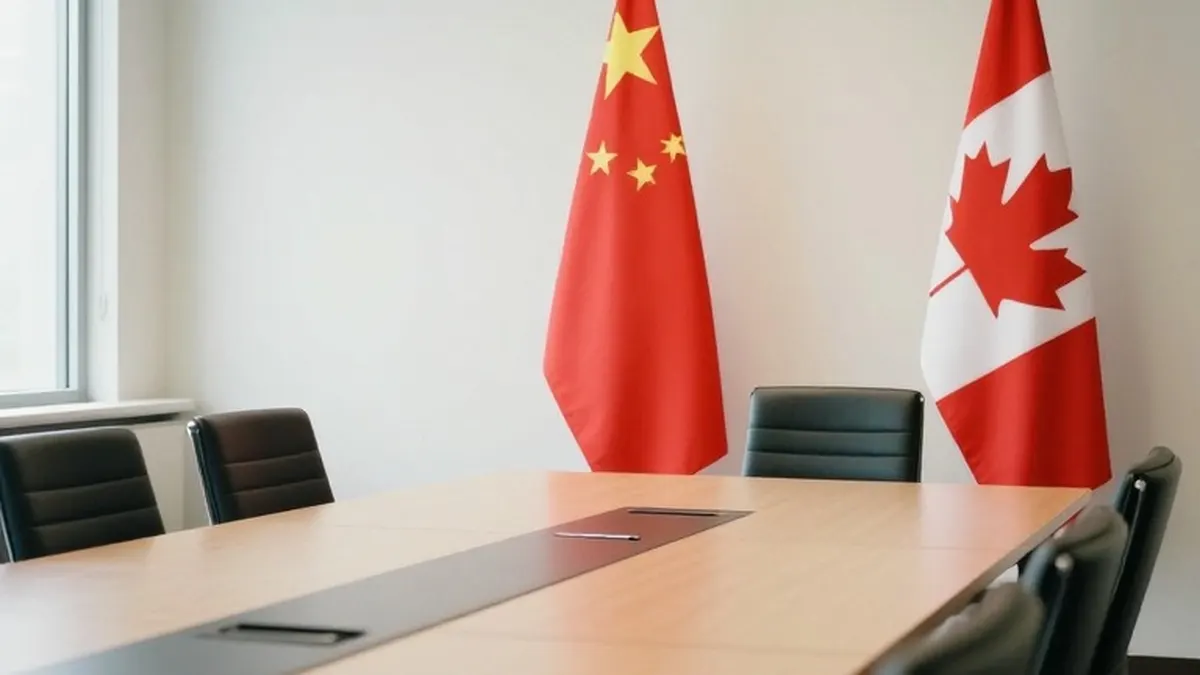
Canada and China have reached a new agreement to reduce tariffs on a broader range of goods. The deal was announced on Tuesday as Canadian Prime Minister Mark Carney works to lower his country's reliance on the United States in the face of tariffs imposed by President Donald Trump.
The announcement followed a meeting between Carney and Chinese President Xi Jinping on the sidelines of the Asia-Pacific Economic Cooperation summit in Shenzhen. The new tariff remissions build upon an initial agreement made in January to open trade channels and repair diplomatic relations that had previously been strained.
According to a statement from the Prime Minister's office, China will provide tariff relief on approximately 400 million Canadian dollars, equivalent to 280 million US dollars, worth of exports from Canada. These exports include frozen pork and seafood products. In return, Canada will maintain tariff exemptions for specific Chinese steel and aluminum products for an additional two years. The agreement also adds relief measures for another 32 steel and aluminum items that are in short supply within Canada.
President Xi stated that stronger ties between the two nations serve their mutual interests while supporting global stability and prosperity. He described the move as the right choice for both countries.
Prime Minister Carney highlighted the increased predictability in the bilateral relationship. He noted that Canada is currently ahead of schedule regarding its goal to increase exports to China by 50 percent by the end of the decade.
This latest deal follows the January agreement where Canada reduced its 100 percent tariff on Chinese electric vehicles to 6.1 percent. This change allows an initial quota of 49,000 vehicles to enter the country annually, a cap that is scheduled to rise to 70,000 over the next five years. China, in turn, lowered tariffs on Canadian agricultural products and recently extended relief for canola meal, peas, lobster, and crab for another two years.
The agreement comes one day after Carney suggested that Canada might turn to Chinese automakers if negotiations with Washington failed to preserve the North American auto industry. Speaking to reporters in Cambodia on Monday, Carney emphasized the importance of a fully deployed workforce in an integrated market. He noted that US trade actions have made that market less integrated.
White House trade adviser Peter Navarro responded to Carney's comments with a sharp critique. He questioned whether Carney was threatening to play China off against the United States. Navarro called the comments offensive and warned that Canada should be concerned about being consumed by Chinese economic influence.
Carney has made seeking markets beyond the United States a core component of his economic strategy. This approach aims to mitigate the impact of US tariffs on Canadian industries such as auto manufacturing, steel, and aluminum. Although trade talks between Ottawa and Washington broke down in August, Carney said on Saturday that he had spoken with Trump and senior officials. He indicated that while differences remain, progress is being made toward a possible deal.
On Tuesday, Carney also met with Mexican President Claudia Sheinbaum. The two leaders reaffirmed their commitment to renewing the Canada-United States-Mexico Agreement. One year after launching a strategic partnership, they agreed to continue expanding bilateral trade and investment. They highlighted a 19 percent increase in merchandise trade during the first nine months of this year compared to the same period last year.