
Arctic Shipping: Vilkitsky Strait Ice Halts Russian Tankers
Sanctioned vessels waited two weeks for icebreaker assistance, revealing logistical gaps in Russia's Northern Sea Route despite record cargo volumes.
By Julian Lee ·
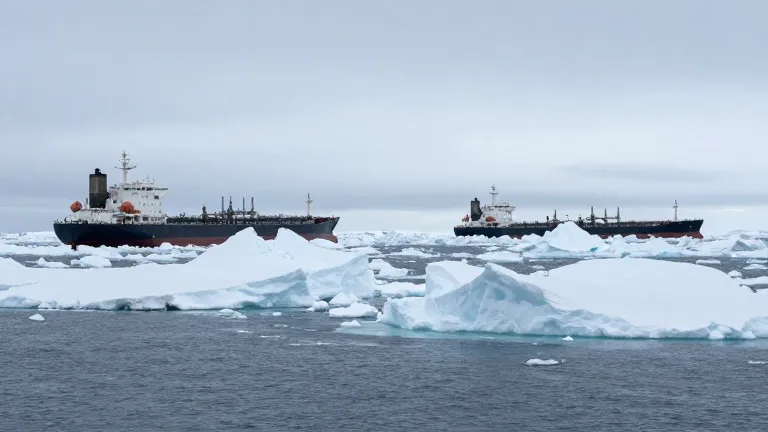
A group of sanctioned Russian tankers spent up to two weeks trapped in ice within the Vilkitsky Strait in July. Only one vessel successfully navigated the choke point, while the rest had to alter their routes after icebreaker assistance failed to clear the passage.
The strait measures approximately 55 kilometers across and sits between the northern Siberian coast and Bolshevik Island. It is a critical segment of the Northern Sea Route, which connects Russia to Asian markets. Two nuclear-powered icebreakers were positioned several days away from the stranded ships, leaving the vessels isolated in the Arctic Circle.
Ksenia Vakhrusheva, head of the Arctic project at the Bellona Foundation, explained that melting ice often packs tightly in narrow channels. This phenomenon blocks ships that lack specific ice-class ratings. Her analysis counters the Kremlin’s narrative that warming temperatures automatically improve navigability along the route.
Russian President Vladimir Putin recently claimed that 37 million tons of cargo moved along the route in 2025. He predicted this figure would nearly double by 2030. However, data from the Norway-funded Center for High North Logistics indicates that Russia shipped about 2 million tons of crude oil to Asia by the end of September. Reuters reported this total reached roughly 20 million barrels by mid-October, representing a 50 percent increase over the previous year but only 1 percent of Russia’s total seaborne oil exports.
Western sanctions complicate Russia’s ability to maintain its maritime fleet. Tomas Alexa of Ambrey noted that spare parts and construction materials must frequently go through third parties. Additionally, repair services previously provided by Norwegian, Danish, and Dutch companies are no longer accessible to Russian operators.
Other nations are beginning to test the waters of the Northern Sea Route. South Korea reported on October 22 that its first container ship used the passage, though officials cited difficult ice conditions in the Bering and Vilkitsky straits. China also completed its first scheduled container service to Europe via this route this year. Kaja Kallas, the EU’s foreign affairs chief, described the region as a front line of global power competition during a speech on October 21.