Sudan Transport Union hikes fares 40% as fuel lines hit five hours
Drivers wait days for petrol while passenger costs spike, leaving workers in Port Sudan and Omdurman with less income for basic needs.
By Julian Lee ·
Sudan’s fuel supply has tightened to the point where public transit operators are cutting hours and raising prices. The Transport Chambers Union announced new fare structures this month to offset soaring operating costs.
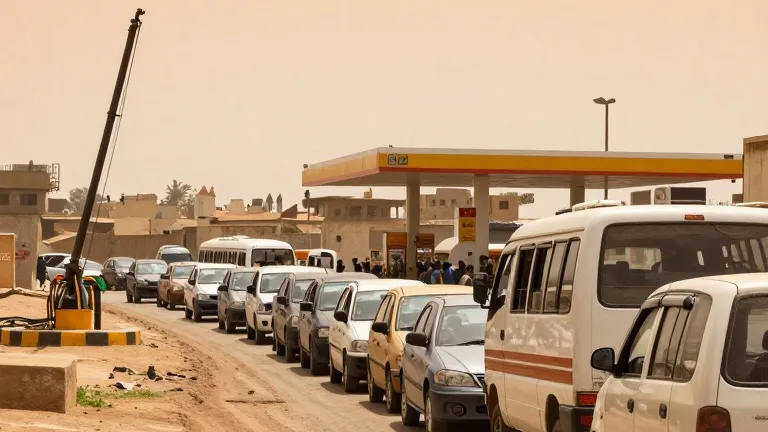
Intercity bus fares have increased by 40 percent, while minibus fares have risen by 30 percent. The union stated that the adjustments are necessary to keep vehicles on the road. Drivers in Port Sudan are now spending significant time in queues, with some waits exceeding five hours.
Azhari Mohamed, a 60-year-old minibus driver in Port Sudan, works seven round trips daily between the Shagar neighborhood and the city center. His vehicle consumes 11 liters of petrol, costing roughly $11.30 at the parallel-market rate. After paying for fuel, he keeps about $5.40 per day to support his family. He told Al Jazeera, "We just need fuel to be available so we can work."
The cost of living has risen for passengers as well. Aziza Ibrahim, a 38-year-old cleaner in Port Sudan, now spends $1.18 daily on transport, nearly half of her monthly salary of $43. She has reduced her work schedule to three days a week to manage these expenses. Her commute used to cost 700 pounds before the war, but routes now cost between 2,000 and 2,500 pounds.
The scarcity stems from the war between the Sudanese Armed Forces and the Rapid Support Forces, which began in April 2023. The Ministry of Energy and Petroleum estimated war-related losses at $20 billion last year. Attacks on the Balila oil field have disrupted supplies to the Khartoum refinery, which previously met 60 percent of the national demand for petrol and liquefied petroleum gas.
Sudan now relies on imports, but government rules requiring importers to deposit 200 kilograms of gold in the Central Bank have reduced the number of active suppliers. Economic analyst Sidi Ohaj noted that this reduced supply relative to demand. He added that drone attacks and the ongoing conflict between the United States and Iran are further disrupting global energy markets.
Businesses in Omdurman are facing similar pressures. Trader Ahmed al-Haj said moving a tonne of goods costs 30 to 50 percent more than before. Local deliveries that once cost 5,000 pounds now range from 10,000 to 12,000 pounds, causing goods to pile up at premises as drivers make fewer trips.
More Business · World news · Business Watchdog · Report a business · Got a Story?