U.S. officials defend tech infrastructure amid wave of major outages
A series of disruptions across aviation, banking, and government networks has prompted questions from experts and lawmakers about the resilience of American digital systems.
By Hannah Takahashi ·
The United States has experienced a notable string of technology failures in recent days, affecting major sectors including air travel, financial services, and government communications. These incidents have led to widespread disruption for millions of Americans and have sparked debate regarding the reliability of critical national infrastructure. Despite the scale of the issues, officials across various agencies have attributed the problems to technical glitches rather than external cyberattacks.
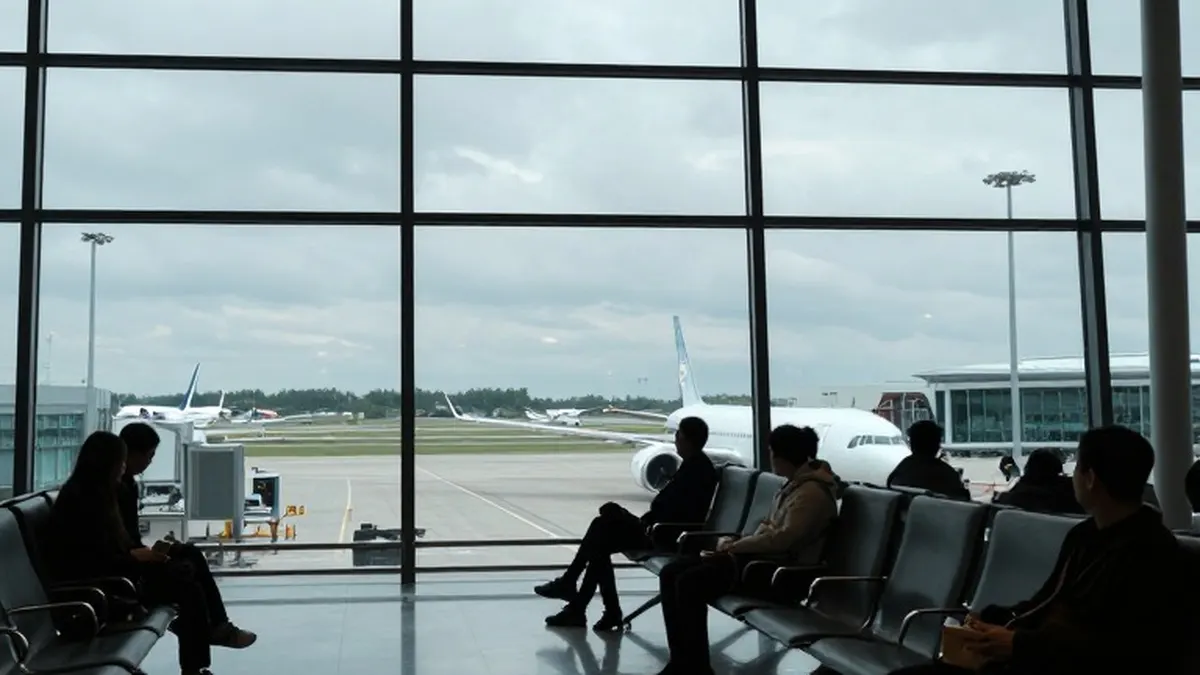
The most visible disruption occurred on Friday when the Federal Aviation Administration ordered a nationwide ground stop. This decision resulted in the cancellation of approximately 20,000 flights between Friday and Sunday. Transportation Secretary Sean Duffy identified a newly installed router as the primary cause, stating that it overloaded the national air traffic control communication system. This overload created intermittent gaps in radar coverage and disrupted communication with pilots. Duffy indicated that while the root cause is not yet fully understood, he intends to share details once the specific failure of the router is determined.
In the financial sector, customers of three major U.S. banks faced difficulties accessing their accounts online on Monday. JPMorgan Chase, the largest bank in the country, described the issue as a temporary problem related to a software bug. The malfunction rippled through the financial system, impacting customers of Bank of America and Wells Fargo as well. JPMorgan Chase officials denied that a cyberattack was responsible for the banking outage.
Earlier in the week, Microsoft experienced outages that affected its email and video conferencing services. The company stated that the disruptions were not caused by a cyberattack or rogue artificial intelligence agents. Instead, Microsoft attributed the issue to a network capacity upgrade. Separately, United Airlines reported a widespread problem with its flight departure management system on Monday, which caused delays for more than 100 flights. Pilots informed air traffic controllers that the issue was related to a system used to determine a plane’s final weight. The airline confirmed that the problem has since been resolved and that it was not cybersecurity related.
The National Security Agency also experienced an outage on Tuesday, when its classified internal communications network went offline. A spokesperson for the agency blamed the incident on temporary degradation during scheduled routine maintenance. The statement assured the public that mission-critical capabilities remained fully operational and that the agency's ability to defend national security continued without interruption.
President Donald Trump addressed the series of outages during the Asia Pacific Economic Cooperation summit in Manila. When asked if he was concerned about the technical failures, the President dismissed the worry. He stated that such events happen when a country is big, powerful, and wealthy, describing the situation as simply part of life.
However, not everyone shares the President's optimism. Michael Allen, a special assistant for national security to former President George W. Bush, described the successive outages as a bit fishy. Allen, who is the managing director of Beacon Global Strategies, expressed concern about the security of U.S. infrastructure in an era where artificial intelligence makes it easier to find vulnerabilities in computer networks.
Hakeem Jeffries, the top Democrat in the U.S. House of Representatives, also raised questions on Capitol Hill. He described the developments as troubling and noted that it remains unclear whether the issues are purely infrastructure related or if there is some malignant activity involved. Jeffries called for the administration to explain the events to the Hill and to outline the steps needed to prevent future occurrences, particularly regarding the trigger for the FAA's ground stop.
Bryan Bedford, the FAA administrator, rejected speculation that the air traffic control outage was linked to a new AI tool launched by the agency last week. He called those claims completely unfounded. Meanwhile, Courtney Manning, a national security expert, noted that while officials insist these are not cybersecurity incidents, the lack of clear origins for the outages continues to generate concern among observers and those affected by the disruptions.