Knesset Appoints Nine Deputy Speakers as Iran and Italy Address Nuclear and Antisemitism Issues
The Knesset has appointed nine deputy speakers to Kahana, while Iran reacts to US reward offers and Italy passes new antisemitism legislation.
By Sofia Suzuki ·
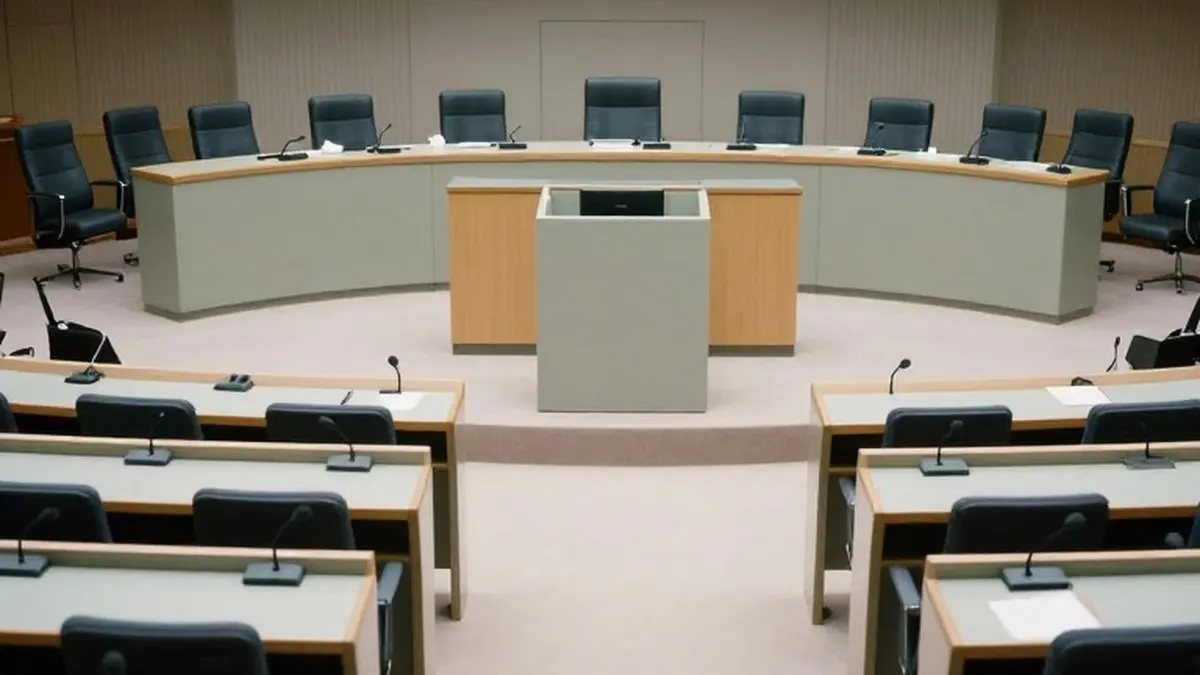
The Israeli parliament, the Knesset, has completed the process of selecting new leadership following the election of Yashar MK Matan Kahana as speaker. In a recent session, lawmakers voted 38 to 15 to appoint nine individuals to serve as deputy speakers. This decision follows Kahana's own election, where he defeated Likud MK Ofir Katz in a 66 to 52 vote to take the top position in the chamber.
The new deputy speaker group includes three members from the bloc led by Gadi Eisenkot. These lawmakers are B’Yachad MK Eitan Ginzburg, Yaya Fink of the Democrats, and Yisrael Beytenu’s Oder Forer. Additionally, MK Walid Taha of the Ra’am party and Joint List MK Ahmad Tibi have been selected for the role. The remaining four deputy speakers are affiliated with the bloc supporting Prime Minister Benjamin Netanyahu. They include United Torah Judaism MK Yitzhak Pindrus, Likud MK Jacob Bardugo, Shas MK Michael Malkieli, and Otzma Yehudit MK Limor Son Har-Melech.
The appointment of Kahana and his deputies has sparked sharp political reactions from the opposition. The Likud party and its allies issued a statement condemning the election as an "eternal disgrace," describing Kahana as having been unilaterally appointed with the votes of what they termed terror supporters. Finance Minister Bezalel Smotrich shared this sentiment on social media, while Communications Minister Shlomo Karhi referred to Kahana using the Arabic term for leader, "ra’is." National Security Minister Itamar Ben Gvir simply described the situation as a "shame."
In his inaugural remarks, Kahana pledged to serve the entire Israeli public regardless of religion, race, or gender. He outlined a vision for future judicial reforms that would be achieved through broad consensus, contrasting this with the outgoing government's approach to its judicial overhaul legislation. Until such reforms are implemented, Kahana stated that the Knesset would strictly abide by court rulings. He also called for the Knesset to move away from the division seen in social media and to embrace the Jewish school of thought associated with the House of Hillel.
Internationally, Iran’s foreign minister, Abbas Araghchi, sent a letter to the United Nations expressing concern over recent developments regarding its nuclear program. Araghchi argued that a US reward program offering up to $20 million for information on Iran’s nuclear activities encourages espionage and targets nuclear scientists. He stated that these measures put Iran’s peaceful nuclear activities and the safety of its installations at risk, particularly because the International Atomic Energy Agency cannot effectively demand inspections while its facilities and personnel are exposed to potential acts of assassination or sabotage.
In a related development, the Bahraini interior ministry issued a warning to residents, urging them to move to the nearest safe location. The ministry, in a post on the social media platform X, cited a potential threat but did not specify the nature of the danger.
Meanwhile, in Rome, Italy’s parliament gave final approval to legislation aimed at strengthening the country's fight against antisemitism. The Lower House approved the measure with a vote of 147 to 93, with five lawmakers abstaining. The bill does not create new crimes but establishes principles for implementing Italy’s existing strategy against antisemitism and formally references the working definition adopted by the International Holocaust Remembrance Alliance.
The legislation has triggered a debate over whether it blurs the line between anti-Jewish sentiment and legitimate criticism of Israel. Supporters argue it is a necessary response to a surge in antisemitic incidents since the October 7, 2023, attack and the ensuing war in Gaza. Critics, however, fear it could restrict protected political speech. Mario Venezia, president of Rome’s Shoah Museum Foundation, noted that while criticism of the government is encouraged, questioning the existence of the State of Israel is a different matter. He emphasized that the bill is primarily a statement of political commitment rather than a punitive measure.