
Kahana elected as new Israeli Knesset speaker in challenge to Netanyahu
Matan Kahana, an ally of Gadi Eisenkot, has been elected as the speaker of the Israeli parliament, marking a significant procedural shift against the outgoing government led by Benjamin Netanyahu.
By Hannah Takahashi ·
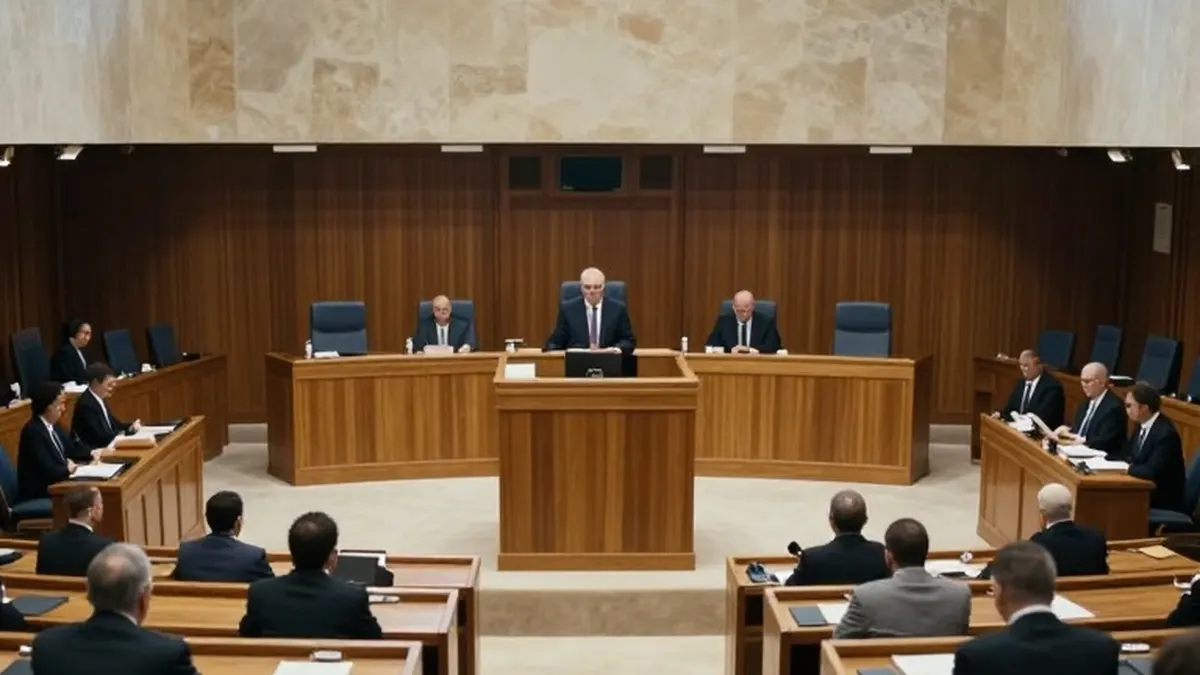
The Israeli parliament, known as the Knesset, elected Matan Kahana as its new speaker on Tuesday. This decision represents a crucial step in rolling back policies enacted by the outgoing administration of Prime Minister Benjamin Netanyahu. Kahana, a 54-year-old former special forces soldier, is an ally of Gadi Eisenkot, the party leader currently tasked with forming the next government.
In the vote, 66 of the 120 lawmakers supported Kahana. The Likud party, led by Netanyahu, had nominated Ofir Katz as its candidate, who received 52 votes. Neither Eisenkot nor Netanyahu secured a majority in the October 27 elections, leading to a prolonged standoff between their respective blocs. The selection of the speaker crystallized this tension, accompanied by a heated debate prior to the final count.
The office of the Knesset speaker carries significant weight because it determines the timetable for parliamentary business. This authority allows the speaker to accelerate or delay debates and votes on proposed legislation. Kahana is expected to begin the process of undoing much of Netanyahu's agenda as soon as Wednesday. Netanyahu, Israel's longest-serving prime minister, has held power for three decades with intermittent breaks.
Eisenkot's broad coalition secured 48 seats in the recent elections, while Netanyahu's bloc won 53. An unprecedented 19 seats went to Arab-majority lists, driven by dissatisfaction with Netanyahu's hard-right government. On Tuesday, the lists aligned with Eisenkot voted for Kahana, with one Arab Knesset member absent from the session.
During his inauguration speech immediately following the vote, Kahana stated, "I will be a Knesset speaker for everyone, irrespective of race, religion or gender." He succeeds Amir Ohana, a Netanyahu ally who has occupied the position since 2022. The speaker also serves as the acting head of state when the president is unable to perform their duties.
The two parties met on Sunday to discuss a potential unity government, though the encounter appeared largely formal. Both leaders insisted on their own right to serve as prime minister. Netanyahu, who has reportedly urged US President Donald Trump to resume hostilities with Iran, continues to emphasize the threat from Tehran to justify the need for a unified front.
In response to recent events, Eisenkot described Netanyahu as unfit to lead the government for even one more minute. His comments followed an explosive media report suggesting that Netanyahu's allies attempted to fabricate fraud allegations to frame lawmakers from the Arab minority. On Tuesday, Israel's central elections committee issued a statement regarding the ongoing investigation led by the Shin Bet intelligence agency.
The committee noted that at this stage, there is no evidence that bribes were paid to voters on a scale that could have affected the election results. With Kahana in the speaker's chair and if Eisenkot maintains the support of Arab-Israeli parties, there is a strong opportunity to impact Netanyahu's legislative agenda before a new government is formally established.
Eisenkot has expressed a desire to rescind sweeping judicial reforms that reduced the independence of the courts. These reforms, initiated shortly after Netanyahu began his latest term in December 2022, triggered massive protests involving tens of thousands of Israelis. Critics feared the changes would erode the country's democratic foundations. Netanyahu has faced corruption charges that could result in imprisonment if he loses power.
Eisenkot has also pledged to quickly establish a state commission of inquiry to investigate security failures that led to the Hamas attack on October 7, 2023. Netanyahu, who has built his political brand on security promises, has refused an independent probe, preferring a commission whose members are chosen by politicians. Kahana, a member of Eisenkot's Yashar party, previously served as minister for religious services in a short-lived government in 2021 and 2022, where he clashed with ultra-Orthodox factions by seeking to limit the power of the Chief Rabbinate.