
High Court to Review Prosecution Bid for Cross-Examination of Mandelblit
The Israeli High Court is set to hear a petition challenging restrictions on how prosecutors can question the former attorney-general during Prime Minister Netanyahu's criminal trial.
By Hannah Takahashi ·
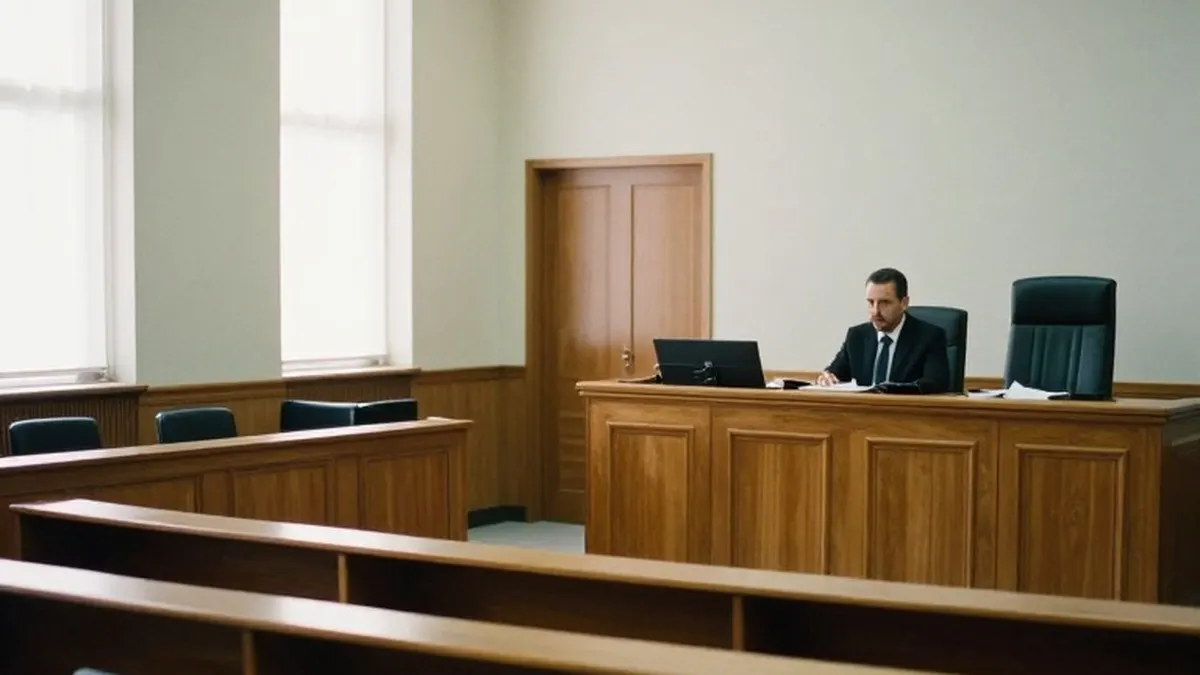
The High Court of Justice in Israel will convene on Sunday afternoon to address a significant procedural dispute in the criminal trial of Prime Minister Benjamin Netanyahu. The court will hear the prosecution's challenge to limitations imposed on its ability to question former attorney-general Avichai Mandelblit. This legal battle centers on whether prosecutors should be permitted to conduct a full cross-examination of Mandelblit or if their questioning should be restricted to re-examination.
The hearing is scheduled for 3 p.m. before a panel consisting of Supreme Court President Isaac Amit and Justices Yael Willner and Khaled Kabub. Respondents in the case are required to submit their responses to the court by 10 a.m. on Sunday. The High Court issued a conditional order on Tuesday, requiring the relevant parties to explain why the requested legal relief should not be granted. This followed a petition filed by the prosecution on Monday, which challenged a decision made by the Jerusalem District Court on November 2.
The District Court had previously ruled that the prosecution's questions to Mandelblit should be limited to re-examination. The lower court treated the defense's questioning of Mandelblit as a form of cross-examination based on a memorandum he had previously submitted regarding his approval of the investigations. Consequently, the prosecution was barred from conducting its own cross-examination. Prosecutors dispute this approach, arguing that because the defense called Mandelblit as a witness, they retain the right to cross-examine him, irrespective of his former role as head of the prosecution.
The distinction between cross-examination and re-examination has significant implications for the trial. Cross-examination allows prosecutors to challenge a witness's account and use leading questions, while re-examination is generally restricted to clarifying points raised during the initial cross-examination. The state argues that the current restrictions impair their ability to establish important facts. Specifically, the limitations prevent prosecutors from effectively confronting Mandelblit with documents and clarifying gaps or contradictions concerning events that took place roughly a decade ago.
The trial is currently in its defense stage, with Netanyahu's legal team presenting witnesses to strengthen their case. The state has argued that the District Court panel exceeded its authority in its November decision. Prosecutors claim that the restrictions have progressively expanded, affecting not only investigators originally listed as prosecution witnesses but also other defense witnesses, including Mandelblit. The petition seeks a broader ruling that affirms the prosecution's right to cross-examine witnesses called by the defense.
This legal challenge is considered unusual, as the state acknowledged that High Court intervention in interim decisions during criminal trials is exceptional. However, prosecutors argued that waiting until an appeal against the final judgment could cause irreversible harm and might require reopening the evidence later. The petition was submitted with the approval of Attorney-General Gali Baharav-Miara and State Attorney Amit Aisman.
In a separate procedural matter, Baharav-Miara was originally scheduled to appear before the trial panel on Wednesday, November 18. However, following a prosecution request on Monday, this appearance was postponed by one week. She is now due to appear on Wednesday, November 25. Presiding Judge Rivka Friedman-Feldman and Judges Moshe Bar-Am and Oded Shaham summoned her to discuss the management of the proceedings and strategies to advance the case.
Netanyahu's trial, which commenced in May 2020, involves three distinct cases. He faces charges of fraud and breach of trust in all three instances, as well as bribery in Case 4000. The prime minister denies all wrongdoing. Case 1000 concerns expensive gifts allegedly received from businessmen Arnon Milchan and James Packer, along with actions taken to advance Milchan's interests. Case 2000 focuses on discussions with Yediot Aharonot publisher Arnon Mozes regarding favorable media coverage in exchange for regulatory steps against a rival newspaper. Case 4000 alleges that Netanyahu advanced regulatory measures benefiting telecommunications company Bezeq, controlled by Shaul Elovitch, in exchange for favorable coverage on the Walla news site.