
General Votel argues new Iran strikes will buy time rather than end conflict
Retired Army Gen. Joseph Votel told NPR that without a defined end state, military force alone cannot force Tehran to the negotiating table.
By Hannah Takahashi ·
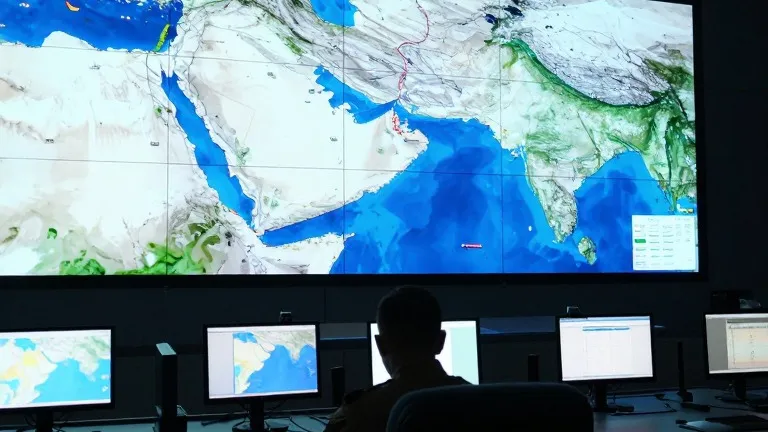
Retired Army Gen. Joseph Votel contends that a potential new wave of U.S. and Israeli airstrikes against Iran will likely weaken the nation's military capacity but will not conclude the war. The former commander of U.S. Central Command, who served from 2016 to 2019, spoke with NPR's Leila Fadel about the strategic logic behind a post-election bombing campaign. He noted that many likely targets have already been struck and that Iran has demonstrated the ability to rebuild them. In his assessment, strikes serve to buy time and punish Tehran, but they have yet to alter the country's fundamental calculations regarding the conflict.
Votel argued that the primary issue facing Washington is a lack of a clear objective. He stated that the U.S. must define its desired end state and establish criteria for declaring the war over. For Votel, that definition centers on two specific issues: resolving the uranium enrichment dispute and reopening the Strait of Hormuz. He warned that once that goal is set, the U.S. must align military, economic, diplomatic, and informational pressure to achieve it, noting that military force is only one component of national power.
On the economic front, Votel identified the financial squeeze as the area showing the most tangible progress. He cited recent reporting that Iran's so-called ghost fleet has run out of oil, a result of the current blockade and sanctions. While he acknowledged that this approach requires patience, he observed that definite movement is occurring in that direction. He added that the U.S. interest in reopening Hormuz is driven partly by the desire to stabilize oil prices and reduce domestic gas and diesel costs, though he noted Iran also uses regional proxies, including the Houthis, to create instability.
When asked about the U.S. military's readiness to sustain these operations, Votel said offensive power in the region remains substantial. He stated that the ability to strike is not in question. However, he identified missile defense as a potential constraint. Earlier reporting has described heavy pressure on defensive interceptors protecting U.S. forces and regional partners. Votel concluded that while offensive capability is sufficient, the defensive side of the equation may face limitations under sustained pressure.