Mariners and Firefighters Reflect on the New Orleans Riverboat Rescue
First responders recount the frantic efforts to save 100 people after a tanker collision caused a cruise ship to capsize in the Mississippi River.
By Hannah Takahashi ·
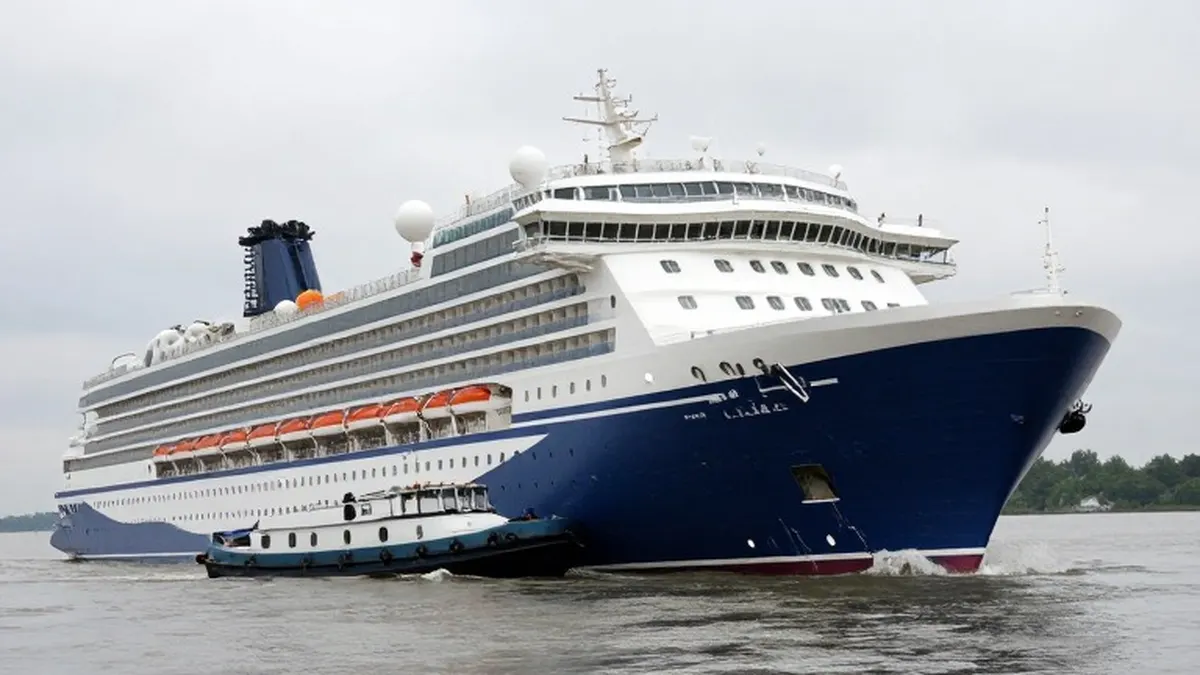
Mariners and first responders involved in the rescue mission following the collision between a tanker and a cruise ship in New Orleans have expressed relief that the operation concluded without further tragedy. The incident, which has been termed the Mississippi miracle, resulted in approximately 100 people being pulled from the water after the American Heritage riverboat struck by the Atlantic Asphalt tanker on Friday. More than 30 individuals sustained injuries during the event.
William Brunner, the captain of the Madison Stone tow boat, was positioned near the scene when he first received the tanker's distress call on the radio. He noted that a tow boat was the only vessel capable of reaching the stricken ship quickly enough. As the cruise ship began to capsize, Brunner and his five-person crew pushed the Madison Stone against the sinking vessel to stabilize it. This maneuver allowed them to access passengers who could not be reached by other means.
Brunner emphasized the close-knit nature of the maritime community during the crisis. He stated that his crew occupied the only position close enough to extract people from the ship. He added that living on the water instills a sense of responsibility among mariners to save one another. His team ultimately managed to rescue 27 people from the cruise ship.
Captain Ryan Williams, who helped formulate a rescue plan during the emergency, stated that the primary objective was to evacuate everyone. He described hearing screams from inside a room with closed glass on the sinking vessel. Williams and other crew members hoisted four trapped individuals out of the room and onto the tow boat. The responders worked in tandem to free those onboard and bring them to safety.
Over 60 New Orleans firefighters also arrived at the scene to assist in the rescue. Varrick Dyer, captain of the department's hazardous materials unit, noted that his team was actively training in rope rescue on a roof just one hour before the incident occurred. Dyer explained that the crew focused on finding those most injured, including individuals who could not move, swim, or help themselves. Many of the passengers were seniors using wheelchairs or crutches, which made the use of standard rescue ladders difficult.
Fortunately, many of these passengers were able to disembark via a gangway connecting the ship to the dock before the vessel capsized. Grant Rodriguez, the fire department captain, described the rapid sequence of events. The gangway was lost, and the boat retracted hard toward the rear, pushing away from the wharf. As the ship rolled, panic spread among passengers who were shivering in the extremely cold river water.
Melanie Montroll, chief of the New Orleans Harbor police, made the difficult decision to send two officers onto the vessel as it began to capsize. She acknowledged the risk of sending them into a no-win situation but trusted her officers. After the rescue, Montroll waded into the river to retrieve the two injured officers, one of whom could not stand. She stated that her goal was to save as many people as possible while ensuring she did not leave her own officers in the water.
Leonard Stewart, the captain of the American Heritage, remained on the bridge throughout the capsize. He repeatedly called for help and kept the boat alongside the dock to facilitate the evacuation of other passengers. Stewart has since received widespread praise from the local community for his leadership during the crisis.
New Orleans Mayor Helena Moreno expressed her gratitude for Stewart's bravery during a recent address. She noted that the captain was present on site for every critical moment and was the last person to leave the ship. The mayor highlighted his decision to stay until the end as a testament to his dedication to the safety of those onboard.