Defense Alliance: Pakistan and Saudi Arabia Finalize Mecca Pact
Two of the three signatories have completed domestic approvals for the collective defense agreement signed in August, even as Turkey continues its own legislative process.
By Sofia Suzuki ·
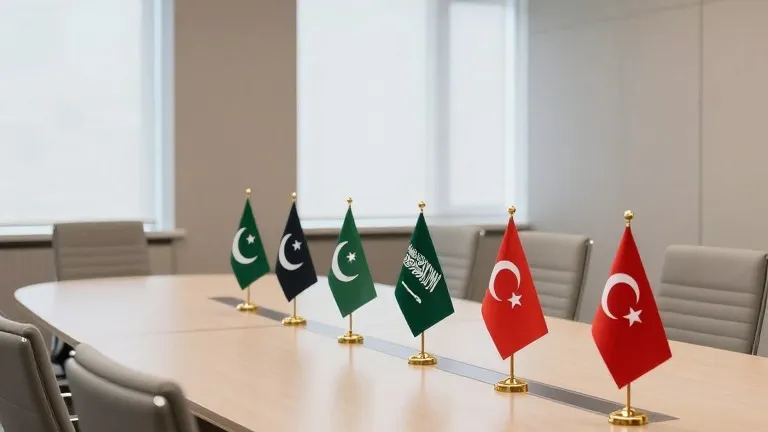
Regional security dynamics are shifting as Middle Eastern powers formalize military commitments. On Friday, Pakistan announced it has finished the legal process required to join a tri-nation defense deal with Saudi Arabia and Turkey.
Sajjad Haider Khan, the spokesperson for Pakistan's Foreign Office, confirmed that both Islamabad and Riyadh have completed their respective ratification procedures. The agreement, known as the Mecca Joint Defence Agreement, was originally signed on 7 August. Khan stated that the three parties are still discussing the operational details of the pact. Turkey is currently navigating its own domestic approval steps, meaning the treaty has not yet been fully activated by all signatories.
The original signing took place in Mecca, attended by Turkish President Recep Tayyip Erdogan, Pakistani Prime Minister Shehbaz Sharif, and Saudi Crown Prince Mohammed bin Salman. The core provision of the treaty is collective defense. If any of the three nations faces an external armed attack, the others commit to providing assistance. The specific level of support will depend on the circumstances of the attack. Pakistan describes the arrangement as defensive and consistent with the UN Charter.
Implementation efforts accelerated following a meeting of the tri-nation Strategic Political and Defence Committee on 5 October. That body agreed that military forces should be deployed rapidly to Saudi Arabia if needed, provided this aligns with each country's internal laws. The push for operational readiness comes against a backdrop of heightened regional tension.
Saudi Arabia has faced renewed pressure from Yemen's Houthis. This week, the kingdom's Civil Defence issued warnings to residents in Abha and Khamis Mushait in the southwest. Authorities advised people to avoid gathering or filming in these areas before declaring the danger had passed. They did not specify the nature of the threat. These alerts coincided with Houthi missile and drone strikes on Saudi infrastructure.
The timing of the ratification also intersects with other regional military movements. The Israeli military announced large-scale exercises for Sunday and Monday involving the air force and units from the Northern and Central Commands. These drills will rehearse scenarios of surprise air and land attacks. Meanwhile, US President Donald Trump suggested the United States might conduct another military operation against Iran as the conflict approaches its eighth month. Reports indicate that American and Israeli forces are preparing plans for new strikes following the US midterm elections on 3 November.