US Citizen Held in Russia Was Systematically Broken Down, Fellow Inmates Allege
Two former Ukrainian cellmates have provided detailed accounts of the physical and psychological abuse allegedly inflicted upon Stephen Hubbard during his four-year detention.
By Hannah Takahashi ·
Two Ukrainians who shared cells with a now-released American national are detailing a grim picture of his confinement, alleging that Russian prison authorities subjected Stephen Hubbard to systematic beatings and humiliation for over four years. Their accounts emerge after Hubbard's return to the United States following a lengthy detention in Moscow-controlled facilities.
Dmytro Khyliuk, a journalist, first encountered Hubbard in September 2022 at the Novozybkov prison located in the Bryansk region, situated near the Ukrainian border. Khyliuk asserts that prison staff deliberately targeted the American from the moment he arrived. "They came during inspections and were asking: in which cell is the American? And then they used obscene words. They threatened him, they mocked him from the first days," Khyliuk stated.
Ihor Shyshko, a soldier captured in Ukraine, corroborates the hostility shown toward Hubbard's nationality. Shyshko claims Hubbard was coerced into reciting prison regulations and singing national anthems under duress, often struggling to read the required texts. He further alleges witnessing guards administer physical punishment, including beatings to the limbs and torso, as well as the use of a stun gun. "They beat him on the legs, on the back, on the arms," Shyshko said, adding that Hubbard was subjected to sexual abuse and deprived of basic sustenance.
Hubbard, 74, was detained in April 2022 after Russian forces occupied Izyum, the eastern Ukrainian city where he resided with his partner. He was subsequently convicted by a Moscow court on charges of serving in Ukraine's armed forces and handed a sentence of six years and ten months. The accounts provided by his fellow inmates align with statements from Hubbard's family regarding his treatment.
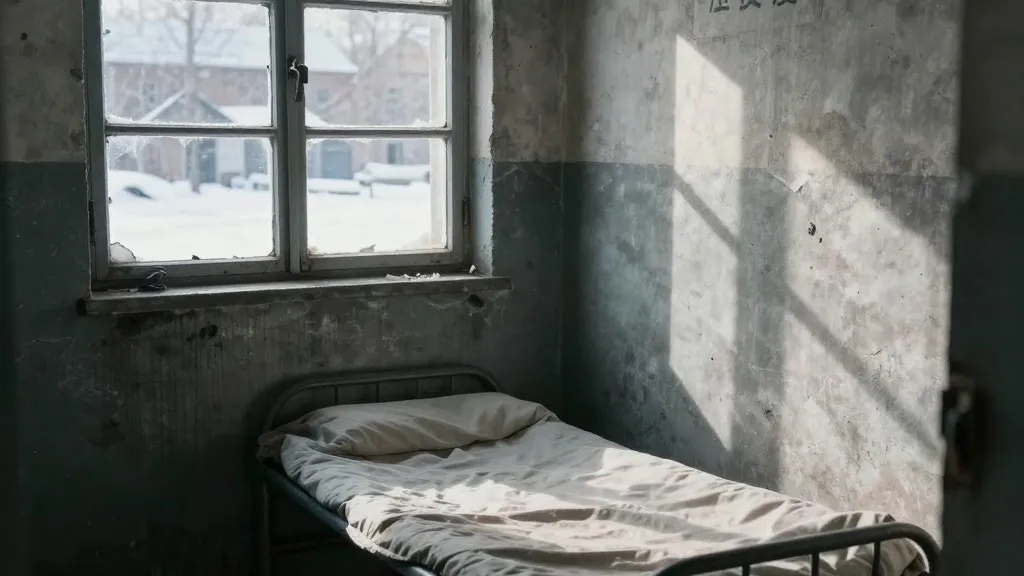
The two Ukrainians describe deteriorating conditions for Hubbard, noting that his health suffered significantly while held at Novozybkov. Khyliuk recalls hearing complaints from the adjacent cell and observing broken windows that let in freezing air, forcing detainees to huddle together in the bathroom for warmth. The inmates were later transferred to Pakino, where Shyshko reports Hubbard's physical state worsened further. "There was not a single spot on his knees or on his feet without rot," Shyshko said, describing a routine involving forced running and stress positions.
Khyliuk alleges that prison officials concealed Hubbard's condition from visiting International Red Cross personnel during the transfer to Pakino. "They saw only what was shown to them and they were happy with that," he said. The International Committee of the Red Cross responded that its policy whenever access is granted involves asking to see every individual to assess their conditions and that it continues to discuss such matters with the parties involved in the conflict.
Khyliuk disappeared from the prison in 2024, leading his cellmates to assume he had been released. He ultimately returned to Ukraine in August 2025 through a prisoner exchange. Upon seeing Hubbard freed, Khyliuk expressed mixed feelings, stating, "it was not his war," yet he criticized the timing of the release as "shameful PR of the US president, who is losing votes in elections to Congress." Shyshko hopes for eventual accountability for the alleged abusers, stating, "Evil must be punished, and so it will be."
Hubbard's release took place after four and a half years, on the same day US special envoy Steve Witkoff met with Vladimir Putin in St Petersburg to discuss the conflict in Ukraine. Witkoff characterized the Russian president as a "humanitarian," while US President Donald Trump indicated he had requested Hubbard's release during a phone call with Putin the prior week.