
Thames Wreck Maintenance: $13 Million Engineering Feat Removes Final Visible Remnants
A successful engineering operation has stripped the last visible structure from a World War II shipwreck, leaving 1,500 tons of explosives to remain submerged under continuous surveillance.
By Hannah Takahashi ·
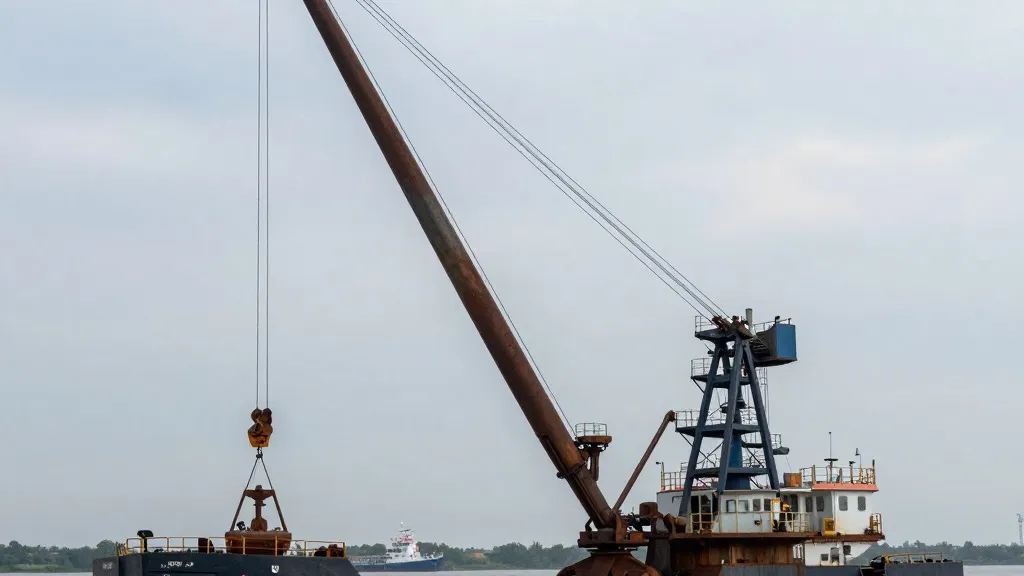
Just under $13 million was the cost of a complex engineering operation that concluded this week, removing the final visible signs of a dangerous World War II shipwreck in the Thames Estuary. The SS Richard Montgomery, a U.S. vessel that ran aground in 1944, still holds an estimated 1,500 tons of explosives in its cargo holds. Although the three rusting masts that have poked out of the water for decades have been extracted, the munitions themselves remain untouched beneath the surface, subject to close and continuous monitoring by maritime experts.
The history of the site dates back to August 1944, when the Montgomery, one of roughly 2,700 ships built in the United States to aid the Allied war effort, struck a sandbar off Sheerness. The vessel was carrying supplies intended for the period following the D-Day landings. It fractured during salvage attempts and sank, leaving its cargo of high-explosive materials in a precarious position about 40 miles from London. For eighty years, the protruding masts served as a familiar landmark for local residents and passing ships, but recent surveys indicated that the deteriorating structure posed a growing threat to the stability of the wreck.
The primary concern for engineers was the possibility that the masts could collapse onto the cargo, triggering a detonation. Nolan Conway, a naval architect with the Florida-based Resolve Marine Group, noted that the ship had begun to lean and that some of the munitions likely contain pressure fuses. This meant that any impact could set off the explosives, making the removal process a delicate balancing act to avoid shaking the wreck or endangering the crew.
To address these challenges, the team designed a custom lifting frame to raise each mast without causing any swinging or swaying. They also deployed a remotely operated underwater diamond-wire saw, which uses hydraulic arms to clamp around the mast and cut through it. This innovative approach allowed the work to be completed without requiring divers to enter the water, significantly reducing the human risk involved in the operation.
U.K. maritime minister Keir Mather announced to the House of Commons this week that the project was completed ahead of schedule and within the allocated budget. He emphasized that the masts had placed a significant load on the structure, and their removal reduces the overall risk while supporting the long-term safe management of the site. The masts have been transported to the Historic Dockyard Chatham museum, where they will be preserved to highlight the ship’s historic role in the war.
Looking ahead, the explosives will remain in place because removing them would carry considerable risks. Officials maintain that the overall chance of an explosion is low, though experts disagree on the potential scale of the impact. Estimates range from minor effects on the shoreline to a tidal wave traveling up the Thames, or perhaps a minor event that would only close a nearby shipping channel. The government will continue to enforce an exclusion zone around the wreck, which lies 1.5 miles off the coast, ensuring that the site remains under strict control.
The removal of the masts marks a significant milestone in the management of this historic hazard. While the Montgomery and its cargo will now be entirely out of sight, the site remains a point of interest and caution. The preservation of the masts in a museum setting ensures that the memory of the ship’s contribution to the Allied forces is kept alive, even as the physical structure disappears beneath the waves.