Serbia heads to the polls as student bloc challenges Vučić
The Nov 8 vote will decide if a non-partisan list can unseat the country's leader after a fatal infrastructure failure.
By Hannah Takahashi ·
Serbian voters head to the polls on Sunday to decide whether Aleksandar Vučić will continue his grip on power or if a student-led assembly will take control of the government. Analysts predict a very tight race, though reliable polling data remains limited. The election marks a shift in Serbian politics, pitting the country's long-time leader against a movement that emerged from grassroots protest rather than traditional party structures.
The Student List originated from nearly two years of anti-corruption demonstrations. These protests began after 16 people died when a canopy collapsed at a railway station in Novi Sad, the nation's second-largest city. Faculty assemblies selected 250 candidates for the ballot, none of whom had previous political experience. The group includes academics, engineers, and economists. Ilija Srdanović, a cardiologist at Novi Sad University, heads the list. He arrived for a media interview on a motorbike wearing a yellow jacket with slogans supporting the students. Srdanović stated, "It is absolutely normal to stand with my students to help them in their fair struggle."
The movement operates without a formal hierarchy or single leader. While Srdanović tops the ballot, he is not considered the primary choice for prime minister. A student at Novi Sad University, who identified herself only as Aleksandra, described the lack of political veterans as a strength. "We've gathered people who are actually the best in their fields," she said. This collective approach contrasts with the traditional leadership model that has defined Serbian governance for the past decade.
Vučić has held various top posts in Serbia since 2012, including deputy prime minister, prime minister, and president. He stepped down from the presidency last month to run for prime minister in the snap election. He maintains support among voters who view him as a strong defender of national interests. He points to economic growth and infrastructure projects over the last ten years. Vučić has criticized the student movement, describing it as foreign-backed and intent on "bring[ing] down our state."
Supporters of the Student List argue that Vučić's Serbian Progressive Party controls state institutions and media. An international election observation mission noted an "overwhelming ruling party advantage" in the 2023 vote due to media bias and the misuse of public resources. A pro-government camp has occupied a park in central Belgrade for 18 months, with residents repeatedly attacking journalists. Vučić has referred to this camp as "a symbol of resistance."
The Novi Sad disaster remains a central issue for the opposition. The station renovation was part of a high-speed rail link to Budapest, a project associated with Vučić. Magda Anastasijevic, an analyst at conflict monitor ACLED, noted that Vučić usually finds a scapegoat during crises. "This was not the case for the canopy," she said. Foreign policy has also entered the debate, with Vučić warning that Serbia's ties to Russia and China could be severed if the students take power.
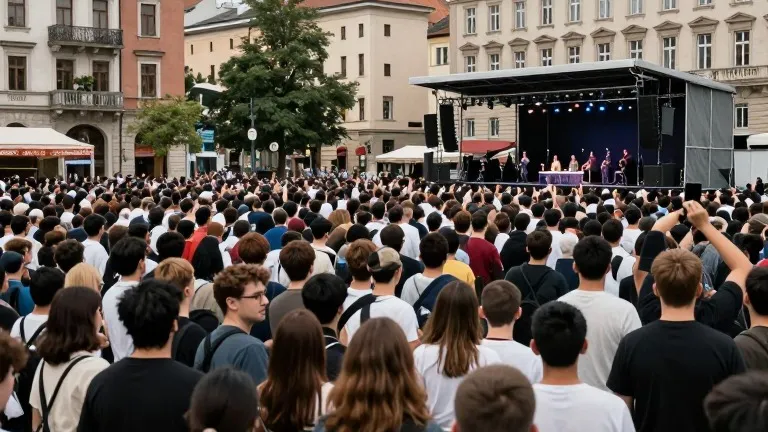
Campaign events in recent days showed a clear divide. The ruling party held a rally at Belgrade Arena with Vučić as the sole speaker. In contrast, an estimated 150,000 people gathered in Slavija Square to hear from student candidates. Voters must now choose between a single strong leader and a collective group of specialists.