French Police Confiscate Katanas and Lead Pellets to Calm Second Week of Unrest
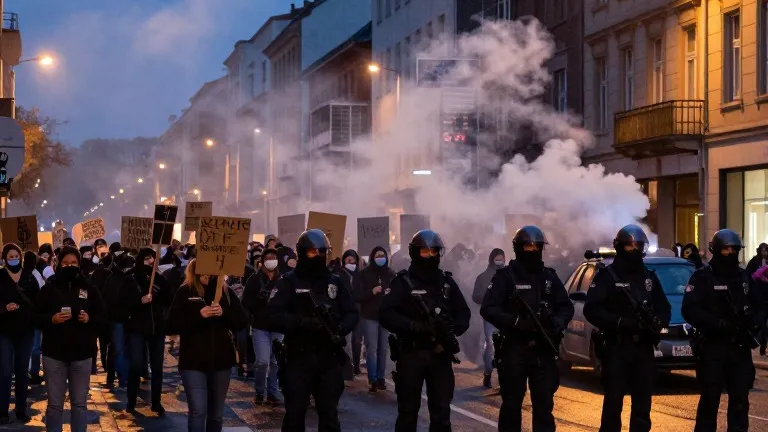
Interior Minister Laurent Nuñez reported 135 arrests and the seizure of diverse weapons during Saturday's demonstrations, which saw police use tear gas in Lyon and Paris.
By Hannah Takahashi ·
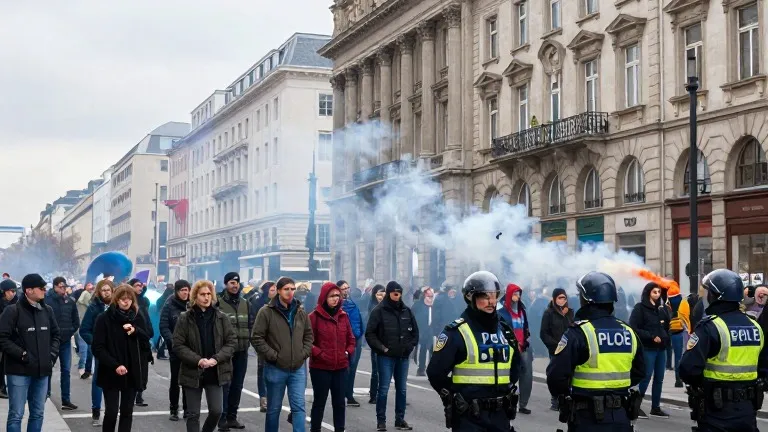
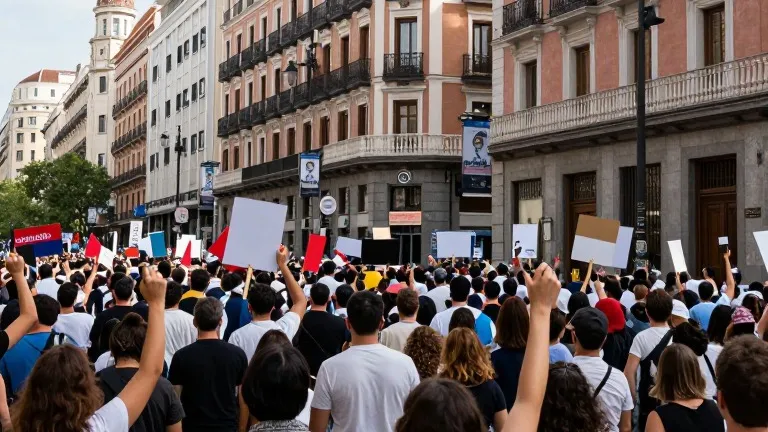
French authorities mobilized a security force of up to 70,000 police officers on Saturday to manage a second weekend of nationwide protests against rising living costs. Interior Minister Laurent Nuñez confirmed that 135 people were detained during the demonstrations. He stated that the force included helicopters, armored vehicles, and water cannons, aiming to prevent the chaos seen the previous week when more than 500,000 people participated.
Nuñez detailed the items confiscated from demonstrators, listing metal balls, lead pellets, fireworks, slingshots, steel balls, improvised weapons, a katana, and airsoft guns. Despite these seizures, the minister reported that no major incidents had occurred across the country thus far. The government sought to project a sense of control as the protests continued into their second consecutive weekend of activity.
In Lyon, where demonstrations were officially banned, police deployed tear gas to disperse a group of about 150 protesters near the city center. The group had briefly attempted to block a road. A 21-year-old student, speaking anonymously to Agence France-Presse, described the police tactics as highly mobile. The student noted that officers frequently intervened to break up marches before the crowds could fully assemble.
Orleans saw thousands of marchers protest a congress held by Marine Le Pen’s National Rally party, an event marking her bid to succeed President Emmanuel Macron. Police counted 11,000 participants in the march, while organizers claimed the number reached 26,000. Approximately 50 groups, including unions, left-wing parties, and student organizations, had called for the demonstration. Chants directed at both political leaders included calls for Macron to resign and for Le Pen to be imprisoned. French media reported the event ended peacefully early in the afternoon, with the party congress expected to continue through Sunday.
In Paris, authorities described the atmosphere at the Porte d’Italie as calm. This was the location for the city’s only authorized march, which had been moved at the last minute from the Bastille to a more remote southeastern area. Union representative Murielle Guilbert called the relocation scandalous, arguing that President Macron had barred protesters from demonstrating in their preferred locations. She added that wages have not risen to the level they should. Lucas, a student interviewed by CBS Saturday Morning, described the public anger as a normal reaction to current conditions.
The unrest has disrupted daily life and major events in the capital. Several prominent museums have closed, and many businesses have boarded up their storefronts. Art Basel opened for a single day on Friday, with organizers canceling their weekend program. The first NFL game in France, featuring the New Orleans Saints, remains scheduled for Sunday, though some related venues were closed on Saturday. A soccer match between Paris Saint-Germain and Olympique Lyonnais, originally planned for Sunday, was moved to Monday night. Approximately 3,000 shops across France were damaged or looted during the previous weekend’s protests.
The demonstrations began last month when high school students in the southeast of Paris demanded better conditions. The movement widened as participants demanded relief from rising living costs. The Yellow Vests, a group that emerged about eight years ago to protest against Macron, announced plans for further demonstrations on October 31. They intend to hold rallies and a sit-in outside parliament and city halls, citing the government’s authoritarian drift as a primary reason for their actions.
Similar unrest has spread to other parts of Europe. Italy sent additional soldiers to Milan following looting and clashes a week earlier. Premier Giorgia Meloni announced tougher penalties for minors, who police said comprised a large portion of the violent crowd. In Tirana, Albania, riot police used water cannons against student protesters demanding lower tuition fees and an end to corruption in education. Thousands of retirees marched in Madrid over pension issues, and a housing protest was expected in Lisbon.