Australia Cuts Forecasts as Oil Climbs
Treasury officials are lowering growth and unemployment projections ahead of the December mid-year budget update.
By Hannah Takahashi ·
Australia's Treasury is trimming its economic projections ahead of December's mid-year budget update, with slower growth and higher unemployment now expected, Treasurer Jim Chalmers said on Friday. The shift follows his speech last week, when he said the economy would be "a bit better" in a year.
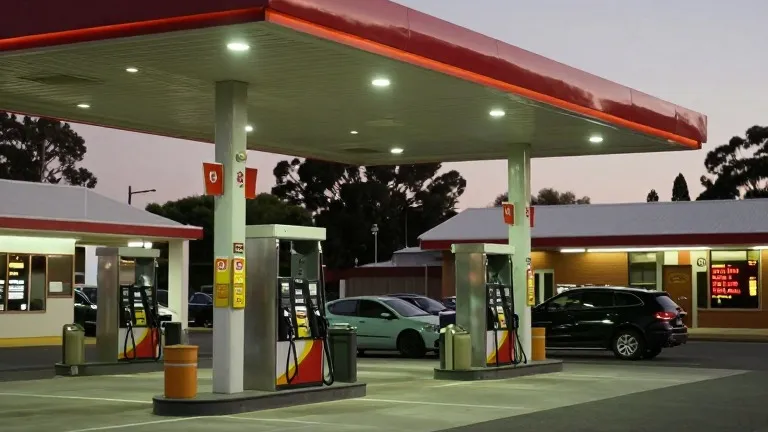
The change tracks a surge in energy markets tied to the widening conflict in the Middle East. The global benchmark oil price reached US$113 a barrel overnight, near the April peak of nearly US$120. Australian motorists are paying 60 cents more per litre than before the United States and Israel attacked Iran, which adds $36 to a 60-litre tank and $144 a month to a household filling up weekly, compared with February.
The New York Times reported overnight that the United States and Israel have prepared plans to resume attacks on Iran after American midterm elections. Westpac analysts have modeled a scenario pushing oil toward US$150, matching warnings the International Monetary Fund issued earlier this month. A fifth rate decision is possible on 3 November, and such an outcome would bear on inflation and rates.
Andrew Hauser of the Reserve Bank described the mix of high inflation, low growth and rising unemployment as a central banker's "nightmare". Chalmers told Politico that "the pressures on people right now are very substantial and obviously that keeps me awake at night." He added that Australia is "hostage as well to decisions taken in DC or Tehran or in Eastern Europe about two wars which are pushing up inflation around the world and weighing on growth around the world."
Each option in front of the government carries a cost. A temporary cut to the fuel excise would lower petrol prices but add billions to motorists' accounts, complicating the Reserve Bank's inflation work. Large spending cuts in the December update would assist the central bank but weigh on an already weak economy and lift unemployment. Westpac analysts have outlined an escalation scenario in which oil heads toward US$150, a concern that echoes warnings the International Monetary Fund issued earlier this month. Community opposition to datacentre construction could slow the build-out of artificial intelligence infrastructure, and another steep sell-off hit Wall Street overnight as investors grew uneasy about rising corporate debt. High government spending works against the inflation fight, and productivity growth is stagnant, meaning the economy reaches its speed limit sooner and inflation runs higher at lower growth rates.